100 Best Building Games on PC — From Sandboxes to Construction Sims
 Anastasiia Sokolova
Building games are a hundred different ways to raise something of your own, and on PC they have piled up to the point where it's hard to choose. One player digs a first dirt hut to survive the night; another runs a conveyor belt across half an alien planet; a third polishes a Gothic cathedral out of blocks just for the beauty of it. This top gathers the essentials, and the rule is simple: here building isn't decoration, it's the whole point of the game. Survival bases, homes to renovate, moated medieval castles, theme parks, automated factories and boundless sandboxes where the only limit is your imagination.
We deliberately separated "building" from "pure management": games where you only give orders instead of laying walls yourself didn't make the cut. This is about full PC titles with construction at their core — no browser "obby" clones, no mobile clickers, no board games. City-builders are their own story: raising a metropolis from scratch we moved into a dedicated top, while here building stays broader than cities alone.
If you want the short version, here's a ten to start with: Minecraft, Terraria, Valheim, Rust, Palworld, Satisfactory, Factorio, House Flipper 2, RimWorld and Planet Coaster 2. Everything else is sorted onto shelves below — from cubic sandboxes to simulators of the real thing.
Sandboxes: Build Anything
The purest kind of building is when a game simply hands you the materials and gets out of the way. Creative sandboxes put making things above rules: survive and defend if you like, or flip on creative mode and raise your dream castle block by block. This is the home of crafting, freedom and that "build however you want" formula the whole genre is loved for. Below — from cult giants to cozy little construction toys.
Minecraft
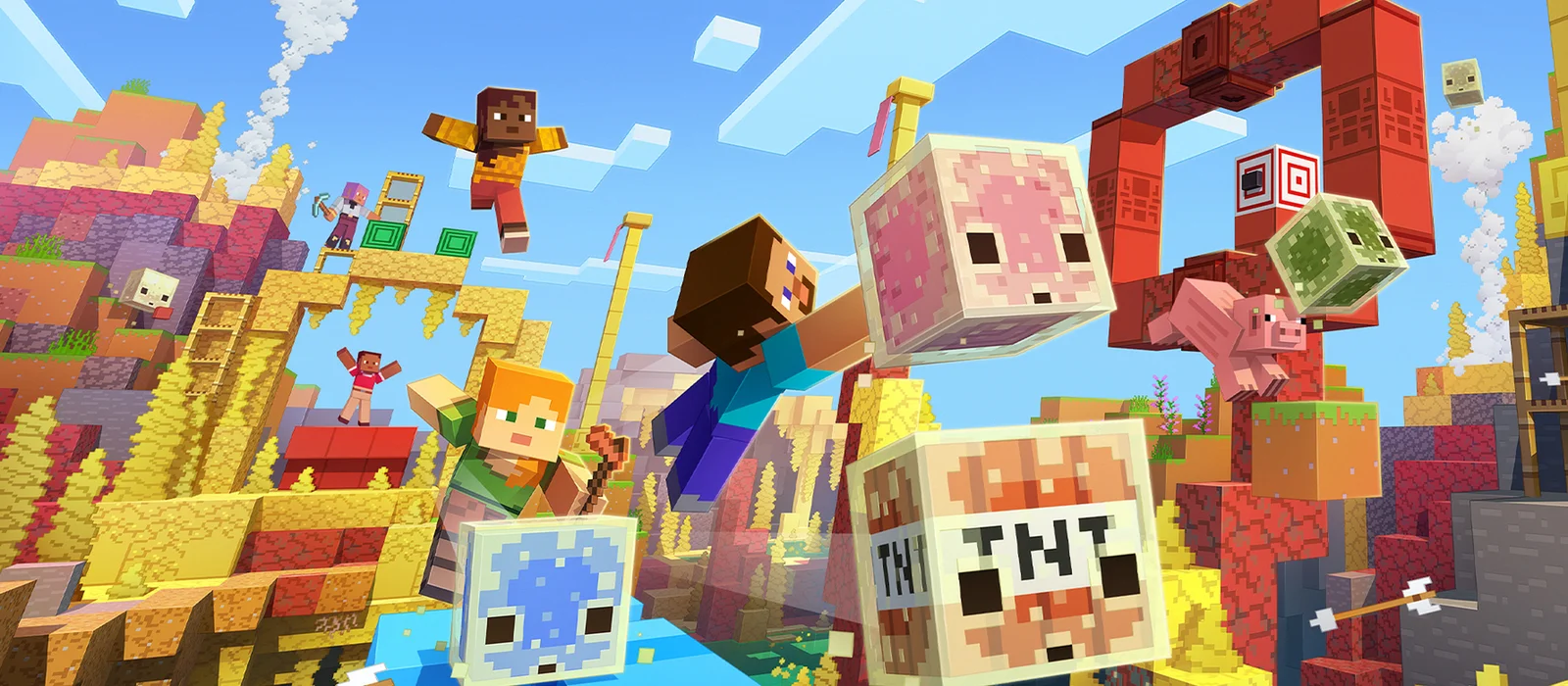
Minecraft is the game most people picture the moment they hear the word "building." Its cubic world stretches endlessly in every direction, and in creative mode you're free to assemble anything — from a crooked little shack to a working calculator wired out of redstone. Survival mode is a different, sharper story: at first you frantically claw out a dirt hole just to live through the first night with a creeper at your back, and a hundred hours later you catch yourself raising a stained-glass cathedral, a farm that spans half the map and a rail network between bases. Between those poles lie villages, automatic sorters, portals to the Nether and the End, and redstone contraptions that add up to real logic circuits. Mods and servers stretch the sandbox to infinity: tech packs with sprawling factories, magic dimensions, roleplay kingdoms with economies. You can build from hundreds of materials, at any height, alone or in a crowd — and that total freedom is what turned Minecraft from an indie experiment into a cultural phenomenon and the genre's eternal benchmark. For a newcomer it's the gentlest way in; for a veteran, a canvas with no frame at all.
Terraria
Where Minecraft works in volume, Terraria offers the same building in a two-dimensional cross-section — and it's every bit as addictive. The layered world is stuffed with ores, bosses and biomes, and alongside all the mining and chopping you're furnishing a base: every NPC wants a proper little house with walls, light and the right neighbours, or the merchant and the nurse simply won't move in. Construction is welded to exploration here — new materials and crafting stations open up as you climb deeper into the caves and further into hardmode. The pixel art is deceptive: behind it hides a huge sandbox where a modest home easily grows into a floating castle, an underground anthill city or a fortress braced for a blood moon siege. A community favourite that, after years of free updates, simply refuses to age.
Enshrouded
Enshrouded blends survival, RPG roleplay and genuinely flexible building into one fantasy world smothered by a poisonous Fog. Its voxel editor is generous: walls, roofs and terraces can be cut and shaped almost piece by piece, so a base grows not from ready-made cubes but from forms you define yourself. You play an Awoken, reclaiming land from the Fog, hauling resources and raising craftsmen in your shelter — and turning a modest camp into a proper castle with workshops along the way. Co-op makes the building shared: one fights while the other finishes a wing. One of the most notable genre projects of recent years, it keeps growing patch after patch and already impresses with its scale.
Garry's Mod
A veteran sandbox that honestly calls itself exactly that. Garry's Mod hands you the Source physics engine, props from a pile of Valve games and a "physics gun," then lets you do whatever you please. Someone builds working cars and catapults, someone stages sets for comics and videos, someone raises whole arenas for modes like prop hunt or the famous TTT. Building here is engineering and mischief at once: beams, ropes, hinges, sliders — and suddenly there's a walking robot or a giant trebuchet in front of you. It has outlasted more than one generation of games largely thanks to its workshop, where thousands of other people's builds and mods wait to be stripped for parts. An eternal construction set where the process matters far more than the result.
Dragon Quest Builders 2
Dragon Quest Builders 2 is a rare case where building is written straight into a story RPG — and set in the Dragon Quest universe, no less. By its legend the world has forgotten how to create, and you are the Builder who returns the very idea of construction to people. Hence the hook: you gather recipes, restore ruined settlements, lay out farms and workshops, and every finished house pushes the story forward. Unlike a bare sandbox it gently leads you by the hand — showing what to place and why — but toward the finale it hands over an island of free building with no limits. Warm, charming and surprisingly deep for a game about cubes; a great way in if plain Minecraft ever felt short on purpose and character.
Vintage Story
Building for those who find Minecraft a little too kind. Vintage Story is a harsh sandbox grown out of mods, and it bets on realism: multi-stage ore smelting, clay pottery thrown on a wheel, honest seasons and a hunger that doesn't forgive laziness. A base here isn't a luxury but a matter of survival — a cellar for food, a forge, shelter from the things that wander in the dark. Yet building is a pleasure too: a microblock system lets you carve columns, cornices and furniture finer than most of its cubic cousins allow. A niche, sometimes hardcore project with a small but devoted audience, where the journey matters as much as the pretty house at the end.
Core Keeper
Core Keeper is an underground sandbox where all the action hides below the surface and you bring your own light. Waking beside an ancient core, you pick your way through caverns, pitch a camp, run walls and floors, set up farms and automate mining, slowly reclaiming the dark from monsters and bosses. You'll want to build not only for defence but for order — a room for cooking, one for crops, one for rare bugs and the drills that dig while you sleep. It plays wonderfully in co-op, each digging their own direction and meeting back at the crypt by the core, and it quietly eats one evening after another. A pleasant, moreish indie hit.
Tiny Glade
Building in its purest, most meditative form — no enemies, no resources, no timers. In Tiny Glade you place cottages and castles across cozy hills, and a clever system finishes the details itself: run a wall and stones settle along it, ivy creeps up, tiles curve over the roof. You can't go wrong, and undoing is a single motion. It's less a game than a digital construction toy for unwinding: put on quiet music, sculpt a fairy-tale hamlet and watch the light fall on the turrets. A small, charming thing that proves building can be a joy without a single number on screen.
Townscaper
An even more minimal construction toy — building as an anti-stress plaything. There are zero rules: in Townscaper you click on the water and cells fold into colourful houses, arches and turrets, while the algorithm decides where a tile goes and where a bridge appears. No resources, no goals, no losing — just you, a palette and an island town growing before your eyes. Some assemble toy Venices, some abstract labyrinths, some just admire the way evening settles over the rooftops. It's loved for exactly that honest aimlessness: you open it for five minutes and close it an hour later.
Eco
Eco is a sandbox with an unexpected twist: you build not just a base but a whole civilization — and you do it without killing the planet. Players on a shared server raise an economy, professions and technology together, putting up houses, roads and factories, but every felled forest and every smokestack strikes a real ecology simulation. Overdo the extraction and a species dies out, a river is poisoned, and a meteor arrives on schedule that the whole world must band together to deflect. Hence its unique flavour: building here is collective responsibility, where you have to negotiate and weigh consequences. An unusual, idea-driven project that grabs anyone who wants more than freedom from a sandbox.
Craftopia
Craftopia crams in everything at once without a shred of restraint — a sandbox from Japanese authors where survival-crafting, farm and factory automation, monster catching and boss dungeons all collide. Building is the glue for that stew: you set up a base, roll out conveyors and garden beds, then run off to the next island for new technology. It's kin to the same studio's better-known title and still in early access, so it's rough in places, yet generous with ideas. For anyone who likes a sandbox that lets you try a bit of everything.
LEGO Fortnite
Tucked inside the big battle royale is LEGO Fortnite — a separate mode that took survival-crafting and rebuilt it entirely out of LEGO bricks. You drop into an open world, chop plastic trees, gather resources, fend off enemies at night and fit out a village: houses, workshops, generators, carts on rails. Building snaps together the LEGO way — from bricks and ready pieces that click into place — which makes it equally comfortable for kids and adults. It's a friendly, bright way into survival-builders, and free inside Fortnite to boot. A major publisher keeps feeding it content, so the world slowly gains new biomes and possibilities.
Portal Knights
Portal Knights mixes a cubic sandbox with a light RPG and scatters it all across floating islands. You level a warrior, archer or mage, hop through portals, fight bosses — and build alongside it all: mining blocks, pitching a base, fitting out a home and workshops for the crafts you need. It differs from Minecraft in its pronounced adventure and progression, and from bigger RPGs in that the world can be dug apart by hand. It's especially good in co-op with friends or family. A cozy pick when you want both creation and a little narrative carrot ahead.
Rising World
Rising World bets on detailed, "engineering" construction in a large open world — a voxel sandbox for the meticulous. Here you place not just cubes but individual elements — planks, beams, glass, furniture — plus wiring and plumbing, assembling genuinely lived-in homes. The world is vast: caves, ores and landscapes for any idea, from a coastal villa to a bunker. A small team has developed it slowly for years; it survived a full rebuild on a new engine and is still in early access — but it rewards patient builders with rare freedom in the details. For lovers of fine finishing.
Base Building & Survival
The hottest layer of the theme: here building is a matter of life. A base gives a roof from the rain, a wall against monsters and a place to haul your loot; the deeper you go, the more imposing the fortifications. These base-building survival games keep you on edge with crafting, hunger and night raids, and the reward is your own fort, grown from a first campfire in the woods. Many play perfectly in co-op, where one fights while the other finishes a wall. A full breakdown of the genre lives in a dedicated top of the best survival games.
Valheim
Valheim is a Norse saga about a fallen Viking cast into a purgatory of ten biomes — and one of the most elegant examples of building in survival. Its structures obey honest physics: a beam won't hang in the air without support, and a tower that's too tall will topple unless you brace it with piles and struts. So a base grows sensibly — a campfire and a flimsy rain shelter first, then a timber house with a hearth and a smokehouse, then a jetty for your longship, a harbour, a palisade fort against night trolls. Every new biome brings materials and threats: beat the next boss, unlock new finishes and crafts. Group builds are a joy of their own — four players raise town halls and ships here fit for a museum. Grim-cozy, with a hand-painted watercolour look, Valheim became a phenomenon almost without marketing and still grows through major updates. The kind of game where you don't just want to survive — you want to settle in.
Rust
The harshest survival in this section — and the most honest about the fact that a base must not only be built but defended from living people. In Rust you wake naked on a shore with a rock in hand and claw everything else from the world yourself: cloth, wood, metal, and from them a foundation, walls, reinforced doors with code locks and traps. Its building system runs deep: a thought-out base with honeycombs, loot rooms and several wall layers can survive a raid, while one slapped together collapses under a neighbour's explosives in a single night. Hence the particular nerve: here you build not for beauty but for survival in a brutal online world where trust is a rare currency. Not for the faint-hearted, but few places make a base matter as much. Kindred projects get a dedicated top of games like Rust.
ARK: Survival Ascended
ARK: Survival Ascended rebuilt the cult dinosaur survival on a new engine — the same foundation, but noticeably prettier. You land on a wild island where tyrannosaurs roam the jungle and raise a base from nothing: thatch huts first, then wood, stone, metal and finally a futuristic tek tier with force fields. The series' hook is taming: a captured dinosaur becomes labour, a living turret and transport all at once, so a base quickly sprouts pens, incubators and pads for flying reptiles. In a tribe with friends it all turns into a proper fortress with gates sized for a brontosaurus. Sprawling, sometimes hardcore and very much "your own" — the kind of game people sink hundreds of hours into.
ARK: Survival Evolved
The original that started the "dinosaurs plus base building" phenomenon is ARK: Survival Evolved. It's the same loop at heart — survive, tame, build — but on the older engine and with a huge trove of free maps and expansions piled up over the years. The graphics trail the remaster, yet the barrier to entry is lower, and the community and mods are still alive. If you want to test the formula without splurging on hardware, you can start right here: the base, the pens for dinos and the defence against rival tribes work just as addictively. And that mountain of free maps and mods will keep you busy for months.
Palworld
Palworld crashed the charts and became a phenomenon: a mix of survival, shooter and "creature collector" where captured beings — Pals — do the work at your base. And it's the base that holds the whole thing together: you place workbenches, furnaces, garden beds and mines, then assign Pals to jobs — one chops wood, another waters crops, a third hammers at the anvil — while you head off to explore and catch new ones. Construction grows with your ambitions: from a tent camp to a multi-storey factory running on the manual labour of furry helpers. Behind the cute façade hides a surprisingly deep base management and a solid gunplay loop. Raw at launch but patched at speed, it's the project everyone heard about within weeks.
7 Days to Die
7 Days to Die is a zombie survival built entirely around one idea: defending your base. Every seventh night a blood-soaked horde rolls in, and everything you spent six days on is stress-tested — the moat, the spikes, the maze of corridors, the reinforced walls and the tidy firing points. The world is fully destructible and deformable, so you can dig, blast and rebuild practically anything — and a proper collapse physics forces you to think about supports, or the fortress comes down on your head. Between raids there are loot runs into cursed cities, crafting and progression. After long years in early access the game finally reached a full release without losing its fans. Ideal for co-op: holding a fort against the horde together is far more fun.
Sons of the Forest
Sons of the Forest is a sequel to the cult horror-survival, dropping you onto an island crawling with cannibals and far nastier mutants. Building has grown up noticeably: a flexible system lets you fell trees and immediately lay anything out of the logs — from a one-night lean-to to a multi-storey house with stairs, windows and automation. By day you explore caves and gather supplies, by night you hide behind walls while the dark howls outside. NPC companions help in a fight and on the build, and co-op turns survival into a shared siege. A tense, at times genuinely frightening game that polishes the original's formula.
The Forest
The mania for "surviving cannibals in the woods" started with The Forest. After a plane crash you search for your missing son and settle in along the way: felling trees, raising a palisade, traps and shelters to live through the night when the enemies come out of the thicket. Building is simpler than in the sequel, but this is where that feeling of a fragile home in a hostile forest was born — one you long to get back to before dark. A special dread waits in the cave network beneath the island, home to the worst creatures and the best loot. Atmospheric, frightening and, surprisingly, an un-aged classic worth starting the genre with.
Grounded
Grounded has a brilliant hook: teenagers shrunk to ant-size and stranded in the backyard, where a blade of grass is a tree and a spider is a "run" boss. You weave a base out of stems, cobwebs and dew, raising it among giant grass, and every detail plays on the microworld. Four-player co-op is the game's native element: building a multi-storey house on a branch together, running rope lines and fending off a spider the size of a bus is pure fun. There's even a story with a mystery about why you were shrunk, so there's no boredom between builds. A charming, bright survival made with care by Obsidian, and not afraid to be funny.
Conan Exiles
Conan Exiles is a brutal survival in the world of Conan the Barbarian, and it builds big. Crucified in the desert, cut down from the cross, you raise your own domain from the dust: from a clay hovel to a colossal fortress with towers, temples and walls you can spot from the other side of the map. The building system is generous and nearly limitless, so fans put up genuine palaces. "Thralls" can be captured and set to workstations or the walls as archers. Bloody and at times explicit, but in sheer scale of construction it's one of the most unrestricted projects in the section.
Subnautica
Subnautica is survival in reverse: not a single shot fired, just you, a submersible and an alien ocean after your ship goes down. Building is the heart of it — from wreckage and ore you assemble an underwater base section by section, watching the hull integrity under the pressure of the deep, running corridors, greenhouses, moon pools for submarines and aquariums. The deeper you dive for resources, the more terrifying and beautiful the world becomes, and returning to your warm, glowing base gives that feeling of "home" almost nothing else does. A smart, gorgeous and pleasantly lonely game that became the benchmark for underwater survival.
Subnautica: Below Zero
Subnautica: Below Zero moves survival into icy waters and onto snowbound land. The formula is unchanged — explore, craft, build an underwater base — but with new biomes, a more talkative heroine named Robin and excursions into the cold, where you can also raise shelters. Section building, watching the hull under pressure and that fragile cozy feeling on the seabed are all intact, and the story has grown warmer and closer. A touch more intimate than the original and a touch kinder to newcomers, but anyone in love with the first part gets another dozen hours of the deep-sea home out of it.
Once Human
Once Human is a free multiplayer survival with a mystical bent: an anomalous contagion has swallowed the world, and among the monster "Deviations" you build a home. The base is mobile in the literal sense — a spot you like can be packed up and hauled to a new place, while the structures themselves snap together from modular blocks quickly and legibly. Beyond building and defence there's gunplay, story puzzles and seasonal worlds that reset with new rules. A strange, atmospheric and, importantly, free-to-play project that quickly drew a large audience.
Project Zomboid
Project Zomboid is the most meticulous zombie survival of the lot — isometric, slow and merciless. There's no "win" here: the only question is how long you'll last in a dying Kentucky. You turn a house into a fortress bit by bit — boarding up windows, building walls and stairs, laying out a rooftop garden the crowd can't reach. Every detail is modelled: mood, weight, fractures, the power that's about to cut out. Building here isn't about beauty but about surviving one more horde. A cult sandbox-simulator where every death is its own little story.
Icarus
Icarus is a session-based PvE survival on a terraformable planet you drop onto from orbit on missions. Its special rhythm comes from a timer: supplies, base and loot stay below while you work against the clock — raise a shelter in time, ride out the storms and weather events, finish the contract and evacuate. Construction is honest and "weighty," with material strength and weather that batters your home. It shines in co-op, where a team throws up an outpost fast for a shared objective. An unusual take on the genre for when endless worlds without a point have worn thin.
V Rising
V Rising brings a vampiric scale to survival: you're a risen bloodsucker set to rebuild an ancestral castle and win back the night from hunters. The base is your lair — you raise Gothic halls, set coffins, altars, dungeons and servant workshops, and the walls must both shelter you from the sun and guard against a rival's raid, since castles here can be besieged. By day you hide in the shadows, by night you hunt for blood and bosses whose trophies unlock new finishes and powers. Stylish, top-down and brisk in combat, it reached a full release and won a devoted audience. A rare case where building a castle is as thrilling as ruling from it.
Raft
Raft has you living on an honest raft in the middle of an endless ocean, and all the building runs outward and upward right across the waves. With a hooked rope you fish planks and barrels out of the water and expand your floating home: decks, sails, water purifiers, garden beds and even a second storey — as long as there's room and the shark circling below doesn't take a bite. Little by little a flimsy four-plank patch grows into a whole floating settlement. It plays great in co-op, each busy with their own edge of the raft. A light, friendly and quietly cozy survival.
No Man's Sky
No Man's Sky is a space odyssey across an infinite galaxy, where a base can be planted on literally any of millions of planets. Building grew from a modest feature into a full system: underground and surface complexes, farms, teleporters between bases, automated resource extraction and even settlements you run as their overseer. Around it all lie exploration, trade, space combat and a story about the nature of the universe itself. The game walked the path from a scandalous launch to one of the industry's great redemption arcs: years of free updates turned it into a gigantic sandbox. For the romantic builder who feels cramped on a single planet.
The Planet Crafter
The Planet Crafter has a mesmerising goal — to bring a dead planet to life single-handedly. You arrive on a lifeless rock and kick off terraforming step by step: placing generators for oxygen, heat and pressure, and as the readings climb the sky visibly warms, rains fall, grass pushes through, lakes and life appear. You build the base around those tasks — from a cramped tin can to a roomy complex with greenhouses. That feeling of "home" and of a world slowly transformed makes it unexpectedly meditative. A small but heartfelt project that grips you precisely with the sense of meaningful progress.
Abiotic Factor
Abiotic Factor is a co-op survival with a love for old-school sci-fi: a team of scientists is locked in a secret underground complex after a disaster, and getting out means slipping through portals, anomalies and monsters. You weave a base right into the offices and corridors — from office furniture, wires and lab junk — which gives the building a hilarious homemade look. Palpably inspired by the likes of Half-Life, it wins with humour, puzzles and the spirit of "we're all engineers now, like it or not." One of the genre's most pleasant surprises of recent years.
Green Hell
Green Hell models an extremely realistic survival in the Amazon rainforest, where even a scratch can turn into infection. Building a shelter is a matter not of comfort but of salvation — from predators, insects and your own clouding mind. Out of bamboo, leaves and vines you raise lean-tos, huts and whole outfitted camps, all while tracking nutrition, hydration, wounds and even leeches on a meticulous body model you have to inspect by hand. There's a story campaign about the jungle and free survival, co-op included. A grim, tense and very "adult" survival where even your own body won't let you relax.
Soulmask
Soulmask leans on an unusual find — an ancient mask that lets you recruit tribesmen and switch between them, which turns survival tribal. The captured natives aren't mere dummies: each has their own skills, and they work the base themselves — chopping, forging, cooking, standing guard — while you're busy elsewhere. Hence construction on the scale of a whole settlement rather than a lone hut: the village grows, gains workshops and defences as the tribe toils under your eye. Solid combat, rich crafting, animal taming and a living jungle set it apart from the survival flood right after launch. A rare case where a survival game puts a whole tribe, not one hero, under your command.
Return to Moria
Set in Tolkien's world, Return to Moria makes you a company of dwarves come to reclaim legendary Moria. Digging and building are in the blood of the folk: you cut through abandoned halls, restore forges, bridges and chambers, wresting the dark back from orcs. Construction is woven into mining and pays respectful homage to the source — halls and bridges known from the books come alive under your pickaxe, while a careless noise wakes an ancient evil in the deep. Moria is procedural and different every time, so the road under the mountain can't be learned by heart. An atmospheric co-op piece for anyone who ever wanted to live a dwarf's life and rebuild a legendary realm anew.
Building & Renovating Homes
A love of its own — games about building homes, where the scale shrinks from whole fortresses to the comfort of four walls. One player scrubs and flips run-down wrecks, another lays a cottage from a blueprint, a third furnishes a family nest down to the last cushion. Here the prize isn't defence but taste: the layout, the finish, the light and that particular joy when an empty box becomes a dream home.
House Flipper 2
House Flipper 2 is the go-to renovator sim, matured into full-blown construction. At its core is the same moreish loop: you pull up to a cluttered house, haul out the junk, scrub the grime, fix and paint, swap the furniture and resell for more. But the sequel added what people asked for years — a free-build mode: now you can not only refurbish someone else's place but raise a house from the foundation, move walls, reshape rooms and floor plans to your liking. Story jobs mixed with a sandbox where you build for the soul offer rare calm: no enemies, no timers — just you, a roller and a sense of taste. A supremely cozy project that even people who've never held a drill sink into.
The Sims 4
For The Sims 4, that legendary life sim, the build mode has long lived its own cult life. While some act out the fates of their characters, others open the game purely to design the perfect house: a flexible system of walls, foundations, roofs and terraces lets you assemble anything from a tiny studio to a family mansion with a pool and garden. Reams of objects, wallpapers and trinkets turn decorating into a genuine hobby, and a huge community workshop grants boundless room. Building here is about domesticity and beauty rather than survival, and that's its charm. A benchmark of home design that still hasn't grown a proper replacement.
inZOI
inZOI is an ambitious next-generation life sim aiming straight at the "Sims" — with a photorealistic look and a generous editor. Building and outfitting a home is one of its main draws: layout, furniture, materials and decor tune very finely, and a signature trick lets you load your own textures and patterns, making an interior truly yours. Beyond building there's running the lives of your Zois in a living city with weather and personalities. The project is young and still finding its feet, but for freedom of home design it already impresses.
House Flipper
The whole "scrub it, fix it, sell it" genre started with House Flipper. There's no free construction from scratch yet, but there's the clean, hypnotic pleasure of setting wrecked apartments right: knock out a spare wall with a sledgehammer, wipe away the filth, plaster and hang wallpaper, fit windows, arrange furniture — and admire the before-and-after. Each house is a little puzzle of taste and wit, and a profitable resale pleasantly tickles the nerve. Add-ons later brought a garden, pets and new houses, stretching the fun. A simple, moreish and surprisingly relaxing game that kicked off a whole wave of "flippers."
House Builder
House Builder is a small simulator devoted entirely to the process of building itself. You're handed a plan and materials, and you assemble a house step by step: lay the foundation, raise the frame, set the walls, roof it and run the utilities — from a historic log cabin to a modern house of concrete and glass. Each stage breaks into clear steps, and there's a particular satisfaction in watching a finished building rise from an empty plot. No filler and no extra systems — just the pure mechanics of putting a house up. A compact thing where the point is the construction, not the survival around it.
Hometopia
Hometopia is a home-design-and-build simulator with an accent on freedom and playing together. You can renovate an existing place or raise a mansion from scratch, playing with layout, walls, styles and furnishings down to the details, while a rare co-op mode lets you fit out a house with friends in real time. Flexible tools, ready-made brief scenarios and a free sandbox make it a handy playground for home architects, and your projects are worth showing off. A pleasant pick when you'd rather not design alone.
Castle Flipper
Castle Flipper takes the renovate-and-build itch and gives it a royal scale: instead of apartments and cottages, here you get castles. You restore and outfit medieval strongholds — clearing rubble, patching masonry, rebuilding halls, towers and walls, then furnishing the chambers with furniture, tapestries and props to match the era. There's also a free mode where a keep is assembled from scratch entirely to taste. The mechanics are simple and meditative, with no enemies and no rush — pure pleasure in setting a ruin right. A niche project with obvious charm for anyone who dreamed of their own fortress as a kid.
Construction & Vehicle Sims
If you want to build with your hands in the most literal sense, this is your section. In these building games you raise not bases but structures: houses on contract with heavy machinery, siege engines out of gears, bridges to the breaking point, ships and cars out of parts. An engineering sandbox where what matters isn't decor but whether the thing you dreamed up will drive, fly or at least not collapse. Practically a genre within a genre, with its own laws and a special joy in a design that works.
Construction Simulator
Construction Simulator is the most honest answer to the phrase "a game about building," no metaphors: you climb behind the wheel of real licensed machinery — cranes, excavators, cement mixers from actual brands — and take on contracts at building sites. You pour foundations, fit floor slabs, run utilities, unload materials and deliver a project step by step, from a private house to a bridge and an industrial hall. The vehicle handling is thorough and tactile, and co-op lets you run a site as a crew, splitting the cabs. A calm, deliberate simulator where the whole pleasure is the process of a big build with all its machinery.
Besiege
Besiege hands you beams, wheels, springs and every kind of destructive iron and lets you construct siege engines out of them. Each level asks you to smash, crush or burn something medieval, and how you do it is up to you: one builds an elegant catapult, another a ludicrous ten-saw walking monstrosity. The joy is that the physics is honest, and half the fun is watching your creation spectacularly fall apart on its first run — a physics sandbox about engineering chaos. A brilliantly simple idea honed to cult status among lovers of engineering experiments.
Scrap Mechanic
Scrap Mechanic sends you to build not houses but working machines — a creative sandbox about mechanisms. At your disposal are blocks, pistons, motors, sensors and logic gates, and out of them you assemble anything: from a simple cart to walking robots, transforming cars and absurd battle combines. There's a survival mode too, with crafting and defence against hostile bots, but the heart of the game is engineering and the physics that brings your wildest ideas to life. A community-adored construction set where the only limit is your imagination.
Stormworks: Build and Rescue
Stormworks is a simulator for meticulous engineers: you design ships, planes, helicopters and specialist vehicles from scratch — down to the wiring, hydraulics and logic circuits — then take them out on rescue missions across a raging sea. Every part does something: pumps move water, engines burn fuel, gauges lie when they break. Building here is hard, and all the more satisfying when the machine you assembled actually saves the drowning. A niche but deep project whose whole reward is making complex machinery genuinely work.
Cosmoteer
Cosmoteer lets you assemble spaceships cell by cell — section by section, weapon by weapon, reactor, crew corridors and shields. Then you lead your fleet into battle, and every engineering choice is tested by fire: a shell punches through the hull exactly where you skimped on armour, while the crew scrambles to patch breaches and put out fires. Between fights come trade, resource gathering and a rise from a lone little ship to a fearsome armada that dictates terms in the galaxy. A great pick for anyone drawn to shipbuilding and the thrill of "will my design hold?"
Trailmakers
Trailmakers is a friendly sandbox about assembling vehicles: from modular blocks and parts you build cars, planes, boats, helicopters and walkers that really drive, sail and fly by the laws of physics. There's a big expedition with exploration and repairs to suit the task, races, challenges and a free mode for pure creativity. Broke a wing mid-flight? You can rebuild the craft on the fly, right in the air. Controls are simple and the picture bright — ideal for engineering vehicles in co-op without drowning in complexity. A cheerful engineering set for company.
Poly Bridge 3
Poly Bridge 3 perfects the bridge-building puzzle. You're given a gap, a budget and materials — wood, steel, cables — and you sketch a structure that must bear the passing traffic, then watch the beams flush red under strain while a bad design tumbles spectacularly into the water along with the truck. The new part added hinges, hydraulics and cunning moving mechanisms, opening room for genuinely intricate, near-engineering solutions, while a sandbox and workshop stretch the fun. An addictive blend of calculation and trial-and-error where even failure looks funny and instructive.
Brick Rigs
Brick Rigs is a physics construction set in the spirit of little "bricks": out of parts you assemble cars, planes, machinery and whole structures, put a driver at the wheel and then test the build for strength — with spectacular, down-to-the-last-piece destructibility. You can calmly build and cruise around a city, act out scenes, or stir up cheerful chaos in multiplayer, where other people's creations fly apart into bricks on impact. The workshop overflows with ready machines and builds for every taste. A simple, spirited sandbox where creation always ends in a little cheerful destruction.
Bridge Constructor Portal
Bridge Constructor Portal crosses a bridge-building puzzle with the Portal universe — unexpectedly well. You raise crossings and structures in the Aperture labs, but with a twist of portals, force fields, accelerators, gels and other signature mischief under GLaDOS's snide commentary. You have to build around tricky physics, where the car flies through portals and speeds up on ramps — an ordinary bridge won't save you here. Each level is a little engineering riddle with the series' trademark dark humour. A witty, compact thing for puzzle lovers.
Factories & Automation
A special branch of building — about conveyors, not walls. Here you raise factories: run belts, place machines, distribute power and lay out production chains that grow from "mined the ore by hand" to a planet-scale plant that runs itself. This automation hooks you for good — "one more conveyor and I'll sleep" is a phrase said here at dawn. Factory-builders have long grown into a direction of their own, and its best representatives are gathered below.
Factorio
Factorio is the game fans half-jokingly call more dangerous than any addiction — and the benchmark for the whole automation genre. You crash on an alien planet and grow a titanic factory out of hand-mined ore: drills, smelters, conveyors, logistics robots, trains between distant workshops — all to get production running and, eventually, to fly away. Each new technology complicates the chains, while local bugs, angered by pollution, force you to weave defence into the factory. Brilliantly designed, bottomless in depth and incredibly addictive, Factorio has long become a household name. And the Space Age expansion pushes production out into space, onto other planets. Not a game so much as a machine for stealing free time in the best sense.
Satisfactory
Satisfactory takes that same automation but moves it into first person and three dimensions — which makes it especially vivid. You're a pioneer on an alien world, and your job is to build a giant factory: from a first hand-drill to multi-storey plants with conveyors to the horizon, pipelines, trains and hypertubes. The difference from its cousins is that you can walk your own build on foot, taking in the scale of your industrial monster against gorgeous scenery. The freedom of layout is total, so factories here turn into genuine works of engineering art. A polished, generous game that reached a full release, and one where it's easy to lose count of the hours.
Dyson Sphere Program
Dyson Sphere Program is automation on a cosmic scale: you start on a single planet and aim for a Dyson sphere — a colossal structure around a star that will harvest all its energy. Hence the unheard-of scope: conveyors and factories underfoot first, then interplanetary logistics, and finally you seed whole star systems with production. Each layer of abstraction opens a new horizon, and the picture of a growing galactic empire is mesmerising. A remarkably ambitious project from a tiny team, a gift to anyone who felt the genre lacked cosmic room.
Space Engineers
Space Engineers is a sandbox about engineering in open space, where you build ships, stations and bases block by block — with honest physics, gravity and destruction. Every ship is a working machine, not a prop: reactors, drills, docking ports, weapons — all of it can be damaged, repaired or blown apart in battle. Mine asteroids and raise orbital shipyards in peace, or wage war in fleets. A deep, technical project with a devoted community: at last starships are assembled not from a menu but bolt by bolt, with an eye on every detail.
Kerbal Space Program
Kerbal Space Program is a brilliant space-program simulator where building rockets sits at the centre of everything. You assemble craft from stages, tanks, engines and modules, then launch them, wrestling desperately with real orbital mechanics for the sake of little green Kerbals. Your first rockets explode picturesquely on the pad, but it's through those failures that understanding comes — and soon you're putting a satellite into orbit, docking and landing on the Mun. It teaches the real physics of space better than many textbooks and delivers an incomparable pride in your own design. A cult thing for future rocket-builders of every stripe.
Captain of Industry
Captain of Industry brings automation together with a colony and logistics in one big industrial strategy. You head up island production: quarries, factories, power plants, ports and a whole fleet of trucks and ships that supply your growing industry and population. Unlike pure "factory" games, here you have to think about people and supply chains at once, which lends the building a pleasant weight. There's a campaign with objectives and a free mode for industrial ambition without a ceiling. Setting up a conveyor isn't enough — you must feed and occupy those who stand behind it, and that grips you in a new way.
The Riftbreaker
The Riftbreaker deftly stitches base building, automation and tower defence to brisk action. You're a scientist in a combat mech on a hostile planet: you gather resources, run a power grid and conveyors, roll out a factory — and immediately fend off oncoming waves of local fauna, reinforcing the base with walls and turrets. A blend of unhurried industrial building and hot defences, when the hordes literally flood the screen, keeps you sharp, and the top-down view and pleasant combat add momentum. There's a story campaign and an endless survival mode to choose from. A great pick if pure factories feel too meditative.
shapez 2
shapez 2 is automation distilled to crystal clarity: no enemies, no dwindling resources, not even hunger — just you and endless conveyors. You cut, paint and combine abstract shapes, building ever more intricate production lines, while the sequel takes it all into three dimensions, onto space platforms and an utterly mad scale. Nothing distracts from the main pleasure — sitting down and untangling the next logistics puzzle. An ideal relax game for the engineering mind, where the joy is a well-tuned, beautifully running factory as such. Meditation in the guise of a plant.
Mindustry
Mindustry is a lively fusion of automation and tower defence in a retro top-down style. You run conveyors, mine and process resources to keep turrets stocked with ammo and power without a break as they hold the line against oncoming waves of enemies. Building the factory directly feeds your defence: break a supply chain and the line collapses under the assault. There's a campaign, a sandbox and player-versus-player modes, and co-op and PvP add to the thrill. A free, open-source and surprisingly deep project that proved a big idea needs no expensive wrapping.
Techtonica
Techtonica carries first-person automation into the neon depths of an alien planet: you build an underground factory, run conveyors and power grids through the dark of the caves, mine ore and unravel local mysteries about what happened here. It stands apart precisely for its underground setting and cozy, almost claustrophobic atmosphere of an industrial labyrinth lit by the glow of machines. The gradual growth of production from a cramped shaft into a whole plant hooks you no worse than the classics. A solid project for genre fans that keeps developing and gaining content. A pleasant addition to the factory-builder shelf.
Astroneer
Astroneer is a soft, stylish sandbox about exploring planets, where building and mining go through terrain deformation. Its signature tool lets you literally sculpt the landscape like clay, digging toward a planet's core and raising bases from modules linked by cables and pipes. Automation here is friendly and legible, without the daunting complexity of the big factory-builders, and flights between planets keep opening new resources and vistas. The pastel look and the spirit of quiet exploration make it a cozy retreat. It plays great in co-op — exploring space in pairs is noticeably more fun.
Foundry
Foundry is a voxel factory in an open world, joining the freedom of Minecraft-like building to the depth of automation. Here conveyors, machines and multi-storey plants can be placed almost however you like, without bowing to a rigid grid, while the world around is pliable and open for mining down and out. A pleasant look and a first-person view let you feel the scale of your own production growing before your eyes. A young early-access project that has already found an audience among those who wanted to build factories more freely than the genre classics allow. A promising blend of sandbox and industry.
TerraTech
TerraTech lets you assemble combat vehicles from blocks and send them to gather resources, trade and fight rival designs. A simple cart grows over time into a whole mobile base on wheels, tracks, propellers or jet thrust, while several corporations offer different parts, styles and approaches to battle. In a fight, shot-off blocks fly away, so you have to repair and rework your machinery right in the field. A blend of vehicle assembly, mining and light strategy makes it unusual, and a machine you put together yourself drives and fires exactly as intended.
Empyrion — Galactic Survival
Empyrion is a space sandbox where survival meets shipbuilding and base-raising on a galactic scale. You fly between planets and orbits, assembling ground bases, starships and orbital stations block by block, mining resources, fighting and trading. In spirit it's something between a survival game and an engineering starship constructor, with enormous building freedom: ships are put together block by block, right down to the internal fittings and hull shape. A single-player campaign, a free sandbox and multiplayer servers all give room to roam. A sprawling, ambitious project for anyone who wants both to settle in and to raise a space fleet of their own from scratch.
Settlements, Villages & Colonies
Here you build not a lone hut but a whole settlement — a village, an outpost, a colony of survivors — which sets this section at the crossroads of survival, RPG and strategy. In some games you personally lay every log of a future village; in others you assign tasks to a handful of wards, but the throughline is one: out of nothing grows a lived-in place you come to care about. This is also where the demand for medieval building lives: villages, town halls, palisades.
RimWorld
RimWorld is a legendary colony simulator better described as a story generator. Three survivors fall onto a random planet and you arrange their lives: sketching rooms, storerooms, workshops and defensive walls, assigning jobs and patching everything the harsh world breaks. Building is the skeleton of the drama here: how a base is planned decides whether the colony survives a bandit raid, a disease outbreak, a psychotic break or an infestation from below. Behind the plain look hides an abyss of systems, and the signature "storyteller" dishes out misfortune and luck so that every run becomes a one-of-a-kind tale — with love, betrayal and cannibalism out of desperation. Mods stretch an already huge game to infinity. One of the deepest projects in this top and a well-earned cult that people sink years into.
Fallout 4
Fallout 4 unexpectedly handed fans a full settlement builder — right inside a blockbuster RPG. Across the post-nuclear wasteland you clear plots and raise outposts from scratch: houses, generators, water pumps, shops, turrets and walls, drawing in settlers and defending what you've made from raiders. For some, building became the main content — people raise whole cities here far more diligently than they play the story. The system is finicky in places, but it's exactly what gave the huge world that feeling of "I built this house myself." A fine way to try building inside a big story and a familiar universe. The ins and outs of raising, growing and defending settlements are laid out in a dedicated Fallout 4 settlement-building guide.
Dwarf Fortress
Dwarf Fortress is an icon of the genre and one of the deepest games ever made: you lead a band of dwarves who burrow into a mountain and raise a fantastically complex fortress. Almost everything is modelled here — geology, magma flows, the mood and injuries of each dwarf, the world's history going back centuries — and out of it come legendary disasters and triumphs that players spin into tales. You build literally everything: halls, workshops, traps, floodgates for drowning enemies in magma. For decades the game scared people off with its austere ASCII graphics, but the Steam edition gained a tileset and music, opening the cult behemoth to new generations. The barrier to entry is steep; the payoff is boundless.
Medieval Dynasty
Medieval Dynasty warmly weaves survival, RPG and the building of your own village in the medieval backwoods. You arrive in the valley a pauper, put up a first hut, plant a garden and hunt to live through winter, then grow: calling in residents, playing weddings, having children and an heir, raising the settlement house by house. Changing seasons and a living world lend it all a measured, almost fairy-tale rhythm. Building here is personal and tangible — you raise each structure for a specific need and with your own hands. A cozy retreat for anyone who dreamed of starting life from a blank page in the Middle Ages. And if it's farming above all that draws you, there's a dedicated top of farming games.
Stranded: Alien Dawn
If you'd like to see RimWorld up close and in three dimensions, Stranded: Alien Dawn is the place. A handful of survivors crash on an alien planet and you fit out their camp: building housing, workshops and fortifications, sorting food and defence against waves of local wildlife. The three-dimensional camera makes base layout vivid, and lines of fire, cover and walls have to be thought through in earnest to fend off the next wave of creatures. Each survivor has their own character, skills and needs, so their daily life and mood want watching too. A solid, charming colony sim with thoughtful arrangement and the drama of a small team's survival.
Bellwright
Bellwright crosses medieval survival with the ambitions of strategy: you're a fugitive who raises a rebellion, freeing villages and gathering people under your command. The settlement you build is your base of power — houses, workshops, fields and defence — and residents can be assigned jobs, turning a handful of peasants into a self-sufficient community. A blend of personal survival and managing a growing town sets it apart from its peers. An early-access project, but already with a firm core — for lovers of the Middle Ages and building with an eye on scale.
My Time at Sandrock
My Time at Sandrock is a life-and-builder sim in one bottle: you're the new builder in the desert town of Sandrock, tasked with pulling the settlement out of decline. From gathered materials you assemble machines and parts at your workshop, fill townsfolk commissions and rebuild the town's infrastructure step by step, making friends and even a family along the way. Beyond the jobs there's plenty of life: dating and marriage, festivals, combat forays into dungeons and ruins for rare materials. A warm, colourful game generous with things to do, where creation is woven into the everyday of a small community and building comes with a human face and an unhurried story.
Nightingale
Nightingale draws you into survival-crafting under an exquisite Victorian fantasy, where you travel through magic portals across whimsical worlds. Outfitting an estate is a key part of the path: you raise houses and workshops in an imperial-Gothic style, decorate and reinforce them, making a base between forays into dangerous realms. The "gaslamp" atmosphere, with gentlemen in top hats taming wild realms, sets it apart from the usual survivals. Each world is generated from a chosen "realm card," so trips for materials always lead into the unknown. The game is in early access and still growing, but its world and building can already draw you in.
Fallout 76
Fallout 76 is the online incarnation of the post-nuclear saga, where building went mobile. The signature C.A.M.P. kit lets you deploy a base almost anywhere in vast Appalachia, pack it up and move it at need, while the structures themselves snap together from the familiar modular kit — houses, fortifications, workshops, automated defenders. Around it lies shared survival, forays and events with other players. After a rocky start the project changed noticeably and won a loyal audience — a chance to build in a living, shared Fallout world.
Len's Island
Len's Island gathers cozy building, farming and grim dungeons onto one picturesque island. On the surface you raise and outfit a dream home almost without limits, plant a garden and enjoy the calm; below ground wait caves teeming with enemies and the thrill of combat. That contrast of peaceful creation up top and dangerous forays down below is the main hook: by day you fit out a cozy house and garden, by night you descend to hack at hordes for resources and loot. Over time a lone hut grows into a whole lived-in estate. A pleasant indie project that lets you build beautifully and fight in equal measure.
Kingdom Two Crowns
Kingdom Two Crowns is a minimal, almost meditative strategy about building a kingdom, folded into a two-dimensional profile. On horseback you ride your lands and toss coins, and from them rise walls, towers and archers, while by night it all repels the assault of the Greed. Behind the deceptive simplicity hides a thoughtful rhythm: develop the economy, reinforce the walls, push the borders and clear the creatures' dens so as not to slide back. Each night is a test of what you managed to build by day. A stylish, atmospheric thing with a charming pixel look, proving a kingdom can be built and defended in such a laconic language too.
Sengoku Dynasty
Sengoku Dynasty carries the cozy "build a village from scratch" recipe into feudal Japan. Among picturesque mountains you raise a Sengoku-era settlement: putting up houses and workshops, gathering residents, keeping a household and mastering crafts through the turn of the seasons. A blend of survival, building and light village management breathes calm and admiration of nature — cherry blossom and mist-wrapped slopes. Peasants can be settled and assigned to jobs, turning a handful of newcomers into a self-sufficient community. A pleasant pick for fans of Japanese colour and unhurried creation.
My Time at Portia
The builder series began with My Time at Portia: you inherit a run-down workshop in the town of Portia and revive it by filling residents' commissions. From gathered materials you assemble parts, repair the town's infrastructure and gradually make the settlement better, making friends as you go. A touch more naive and simpler than its later sequel, but a charming and kind simulator of creative labour in its own right, with friendship, romance and dungeon forays. A lovely, warm way into the series before you take on the scale of Sandrock.
Castles & Fortresses
A passion of its own — raising strongholds: moats, walls, keeps, gates to wait out a siege behind. These castle-and-fortress building games are fused with strategy and defence, because what you build is tested at once by battering ram and catapult. From the economy of a medieval fief to fending off absurdly huge hordes, construction here always keeps one eye on "will it hold?" The pillar of the genre is the Stronghold series, and that's where we'll start.
Stronghold: Definitive Edition
Stronghold: Definitive Edition is the updated release of the very game that taught a generation to build castles. Here are two sides of one coin: first you raise a fief's economy — farms, storehouses, houses, crafts — then you wall it in, set towers, a moat and traps to beat back a siege. The series' signature is that defence and economy are inseparable: a starving garrison won't hold a wall, and without stone and wood you can't raise a keep. The re-release freshened the graphics and comfort while keeping the original's spirit, and with it the historical campaign and free building. A classic people return to for decades, now in a shape fit for the present.
Stronghold Crusader: Definitive Edition
Stronghold Crusader: Definitive Edition is the update of the legendary offshoot that, for many, is "the real Stronghold." The action moved to the hot sands of the Crusades, and the accent shifted to fast skirmishes and defence: you raise a castle, set up a meagre desert economy and hold the assault of enemy waves in endless bouts. It was exactly these skirmishes and cunning AI opponents that became cult favourites. The re-release carefully modernises the picture and comfort without touching the beloved balance. A must if you caught the genre in its golden age.
Stronghold: Warlords
Stronghold: Warlords carried castle building to the Far East — into feudal China, Japan and Vietnam. To the familiar pairing of "economy plus defence" it adds a system of warlord vassals you can subdue and use their powers in battle. You still raise a keep, feed the garrison and hold a siege, but with fresh Eastern colour, gunpowder weapons and a spiritual mechanic of honouring ancestors. Campaigns lead you through the region's history, while free skirmishes let you build and fight by your own rules. Not the most revolutionary chapter, but a fresh one in setting — fortress-raising with an Eastern flavour.
Diplomacy is Not an Option
Diplomacy is Not an Option is a strategy with a telling name and a mad scope: diplomacy really isn't an option here — literally thousands of enemies pour onto your castle across the screen. You hastily raise an economy and defence, put up walls, towers and cunning traps, and the physics gleefully shows the horde crashing over your fortifications. A blend of medieval builder and tower defence with a pinch of dark humour keeps you under constant pressure: just get the economy running, and another armada already blackens the horizon. Beyond defence there are conquest and raid modes, so building up and sitting tight won't work. Here you build a fortress and heroically defend it in the same breath, with no pause between.
Norland
Norland is a medieval kingdom strategy at the crossroads of colony sim and RimWorld-style drama. You raise a settlement and castle, keep a household and watch over nobles with their own characters, intrigues and faith. Building is intertwined with the fates of specific people: the nobility have their own desires, literacy and beliefs, while commoners toil and revolt if pushed too far. Hence every run gathers its own dramas — intrigues, executions, uprisings against the backdrop of a growing castle. An ambitious early-access project offering an unusual blend of raising a stronghold and managing living, capricious subjects.
Ancient Cities
Ancient Cities is an ambitious simulator of a settlement's growth from prehistoric times, leading a tribe across the eras. From a primitive camp a village grows, then a fortified town: you build dwellings, master crafts, hunting and farming, advancing through Stone Age technologies and beyond. Its attention to historical daily life — hunting, gathering, seasons and Stone Age crafts — sets it apart from its peers. Watching a primitive camp of a few huts turn into a fortified settlement is fascinating in its own way. The game is in early access and still rough, but the premise of a civilization born from the very basics is winning.
Parks, Zoos & Prisons
Themed building, where you raise not housing but a whole establishment — a theme park, a zoo, a prison — and draw every metre of it yourself. Here construction goes hand in hand with management, but you lay it all with your own hands: sketching the loops of roller coasters, sculpting the terrain of enclosures, routing the corridors of a maximum-security block. The kind of case where what you build springs to life at once — visitors, animals and inmates run around in it.
Planet Coaster 2
Planet Coaster 2 brings the building of attractions to the level of an art — the peak of the theme-park genre. You sketch roller coasters node by node yourself, from smooth banks to head-spinning loops, and between them place stalls, decorations and, an important addition in the second part, whole water parks with pools and slides. The tools are nearly limitless: the community recreates real parks and builds fantastical worlds piece by piece. Behind the façade is a living simulator with guests who have their own wishes and moods. A deep, beautiful sandbox where the boldest parks are limited only by imagination, not by the tools.
Planet Zoo
Planet Zoo puts animals and a natural habitat for them front and centre — the benchmark zoo builder. You sculpt enclosures by hand, shaping terrain, ponds and vegetation for each species' needs, and the animals respond to care and space with striking authenticity. Building combines freedom of decor with real responsibility: a cramped cage the creatures won't forgive. Beyond raising it there's running the park, breeding and protecting rare species. A touching, deep project where you build not for the tills but for a living corner of nature, and it shows in every enclosure.
Prison Architect
Prison Architect is a cult simulator where you design and build a prison — from the foundation to a maximum-security wing. The top-down view and blueprint mechanics turn construction into an engaging puzzle: cells, canteens, yards, guards, utilities and the paths the inmates will flow along, each with their own character and escape plans. Every architectural choice comes back on you — a bad layout breeds riots and stabbings. A grimly charming, bottomlessly detailed project that proved you can build even a prison — and it's addictive.
RollerCoaster Tycoon 3
RollerCoaster Tycoon 3 is the classic a whole generation of park lovers grew up on, and still one of the best ways into the genre. You build attractions and roller coasters in three-dimensional parks, lay paths, plant trees, put on firework shows and keep the guests happy while the tills stay full. The chance to ride your own coaster in first person was once a real revelation, and it still delights. Warm nostalgia mixed with a formula that still works — classic parks without the extra complexity, exactly as they're remembered.
Jurassic World Evolution 2
Jurassic World Evolution 2 offers park building with the difference that the residents can eat you. You raise enclosures, labs, shelters and all the infrastructure for dinosaurs, hatch the beasts from DNA and match their conditions, then hold the fragile balance between spectacle and safety — a poorly fenced tyrannosaur will turn the park into bloody chaos. Building pens for each species' needs, weather emergencies and defending against escapes keep you sharp, and the familiar universe with its score adds thrill. Your own Jurassic park is finally yours to raise — with all the risk that entails.
Planet Coaster
Planet Coaster is the original that set a new standard for theme-park builders. It was here that the signature tools let you sculpt coasters and decorations with almost sculptural precision, assembling attractions out of literally thousands of small parts — from a wrought-iron fence to a single lantern. A full simulator of guests and park economy comes with it: visitors have their own moods, appetites and fears, and the park has to be tuned to them. The community workshop still bulges with other people's masterpieces. The first part trails the sequel in scope, but even today it stays a generous, community-loved sandbox for park architects.
Parkitect
Parkitect is an indie return to the spirit of the classic park tycoons with a pleasant isometric look. Beyond building coasters and attractions, the game gets seriously into the backstage: warehouses, goods delivery, staff routes and freight yards — everything the big simulators hide from guests, here you have to plan yourself. That accent on logistics lends the building a pleasant depth, while a hand-drawn picture and a workshop of other people's parks add coziness. A charming find that scratches the old-school tycoon itch with modern conveniences.
Park Beyond
Park Beyond raises imagination on a banner: its trick is "impossification," letting you build attractions unthinkable in reality — coasters that fire carts from a cannon, platforms floating in the air. You still sketch tracks, set stalls and lay out paths, but with an eye on spectacular absurdity and flights of fancy, while a story campaign leads you by the hand and feeds you fresh ideas. A bright, bold alternative to its more down-to-earth peers — a jolt of madness for theme-park sims that played it too safe.
Planet Zoo 2
Planet Zoo 2 is the sequel to the beloved zoo builder, carrying forward all the best of the first part. Raising enclosures, sculpting terrain and caring for authentic animals have grown richer still, and the building tools more flexible: terraces, ponds and vegetation yield more finely than before. The bestiary has expanded, along with the ways to give each species a proper home, and the community workshop again fills with other people's masterpieces worth borrowing for ideas. The second part is a natural bid for a new genre benchmark. For everyone who wants to build a dream zoo on the richest toolset in the series.
RollerCoaster Tycoon Classic
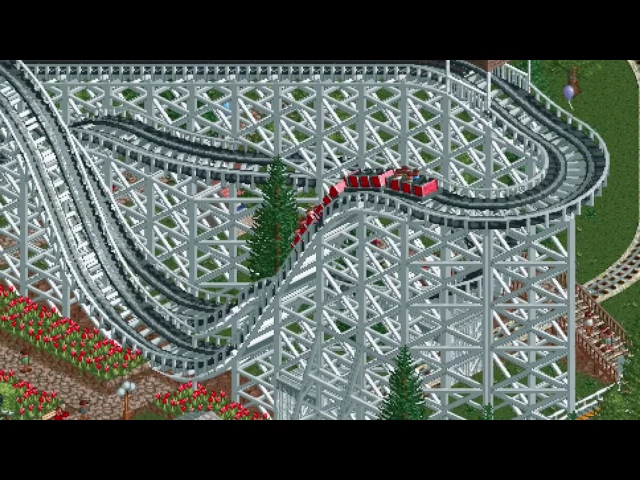
RollerCoaster Tycoon Classic carefully gathers the legacy of the series' first two parts into one — in the very isometric look they were loved for. You design coasters node by node, set attractions and stalls, lay paths, hire cleaners and mechanics and balance the park's budget, enjoying clean, no-frills tycoon mechanics. Dozens of ready scenarios with objectives serve up challenges for any taste, while a sandbox lets you build without limits. An ideal choice for nostalgia or for meeting the genre's roots. A simple, addictive classic that asks little of your hardware.
Jurassic World Evolution 3
Jurassic World Evolution 3 is the third part of the dinosaur-park series, carrying forward and expanding its predecessors' ideas. Building enclosures, labs and infrastructure has grown more varied, the planning tools more flexible, and the care for the prehistoric residents deeper: the reptiles have more habits and needs to account for in construction. The balance of spectacle and safety is still on a knife's edge — skimp on a fence and the park drowns in chaos. This continuation in the Jurassic universe adds noticeably in scope over the earlier parts. The chance to raise your own dinosaur park reaches a new level here.
Zoo Tycoon: Ultimate Animal Collection
Zoo Tycoon: Ultimate Animal Collection is an updated gathering of the classic zoo builder that brought a much-loved series back in a shape fit for the present. You raise enclosures, lay paths, set attractions and stalls, run the park and care for the animals in a kind, accessible manner without needless hardcore. You can even walk your own zoo in first person and see it through a visitor's eyes. The simple, friendly mechanics make it a fine option for family leisure and young architects for whom the big simulators are still too much. Warm nostalgia for those who grew up on the original.
Let's Build a Zoo
Let's Build a Zoo is an unusual zoo builder with a pixel look and a cunning twist: you can not only raise enclosures, lay paths and run the park but also crossbreed animals, assembling thousands of quirky hybrids like a giraffe-penguin. Building sits beside brisk management and a pinch of dark humour in its moral dilemmas — whether to trade on the black market or keep an honest zoo's good name is up to you. A charming, moreish project that wins with lightness and originality — a zoo with character and a dash of absurdity you won't find at its more serious cousins.
Prehistoric Kingdom
Prehistoric Kingdom brings a park of extinct animals to life — from dinosaurs to mammoths and sabre-toothed tigers — with an accent on flexible enclosure-building and attentive care of your charges. Powerful tools for sculpting terrain, water and vegetation let you assemble genuinely picturesque, natural habitats for each species rather than dull pens. The game is in early access and gradually gaining strength, adding new residents and building options. A worthy way to bring prehistoric fauna to life with your own hands and settle it in a scenic park.
What About City-Building?
If by "building" you mean a city in particular — with districts, roads, transport and a balanced budget — that's a big, separate theme with its own flagships: Cities: Skylines II with its metropolises, the medieval Manor Lords or the harsh Frostpunk 2. We chose not to mix full city-building simulators into this top, so as not to turn it into a mess, and gathered them in a dedicated top of city-building simulators. And here building stays broader than cities alone — from a cubic tower to a whole zoo.
Frequently Asked Questions About Building Games
Which building games should I play on PC first?
Start with the proven hits: Minecraft and Terraria for a pure sandbox, Valheim, Rust and Palworld for base building and survival, Satisfactory and Factorio for factory lovers, House Flipper 2 for home renovation and construction, Planet Coaster 2 for theme parks. These are different facets of one genre, so it's easiest to pick by mood: build for the pleasure of it, or survive while defending your walls.
Are there building games on phone and Android?
This selection is built around building games on PC, where the scope and freedom of construction are noticeably greater. That said, some of the projects also exist on mobile: Minecraft and Terraria have full versions for Android and iOS, and phones have plenty of their own building sandboxes. But if you want truly large-scale construction, PC remains the best choice.
What are the most interesting home-building games?
Home building and renovation are covered by House Flipper 2 and the first House Flipper, House Builder with its step-by-step assembly from a plan, and the life sims The Sims 4 and inZOI with their deep housing modes. In them you can both restore run-down wrecks and raise a dream home from scratch, planning the layout and furnishings down to the last socket.
Are there free building games?
Yes, and quite good ones: Once Human, a multiplayer survival with base building; the LEGO Fortnite mode inside Fortnite; and Mindustry with its automation and defence are all available at no cost. It's a good way to try the genre without buying anything up front.
Which building games run on a weak PC?
There are plenty of undemanding options: Terraria and Townscaper, tycoons like RollerCoaster Tycoon and Prison Architect, and among the deep ones Dwarf Fortress and Factorio, which run beautifully even on modest hardware. It's worth checking each such game's system requirements, but on the whole the genre is friendly to older machines.
Which base-building survival games are considered the best?
For the pairing of building and survival, the names most often mentioned are Valheim, Rust, ARK: Survival Ascended, Palworld and 7 Days to Die. Here the base is a matter of life: it shelters you from enemies and weather, stores your loot and grows from a first campfire into an imposing fortress you'll be proud to defend alone or with friends.
What about city-building games?
Building a city with districts, roads and transport is a separate genre — the city-building simulators like Cities: Skylines II, Manor Lords and Frostpunk 2. To keep them from mixing with sandboxes and survivals, we moved cities into a dedicated top of city-building simulators.
And which building game is your favourite, and what's the grandest thing you ever raised in it? Share your builds and finds in the comments — it only makes the selection more useful.
Quel jeu de construction préfères-tu ?
What Else to Play
The genre doesn't end at a hundred entries — a building element hides in plenty of games that didn't make the main list but deserve a look. Below are a few neighbouring projects where raising a base, a home or a machine is also front and centre. And since building is almost always more fun in pairs, a dedicated top of co-op games will come in handy — many of the builds in this selection play perfectly in company.
Fortnite
The planet's foremost "building" battle royale: here raising walls, ramps and cover from scavenged materials isn't decoration but the basis of combat. While rivals shoot, you throw up whole towers on the fly to take the high ground and hide, and it's that instant construction that made Fortnite a phenomenon. The separate LEGO Fortnite mode added full survival with village building, but the classic build-battle remains a test of reflexes and spatial sense like nothing else.
Kenshi
Kenshi is a harsh RPG sandbox in a post-apocalyptic desert, where you start as nobody and decide for yourself who to become — a town founder among them. Building is an important milestone of the path: you buy a plot, raise walls, workshops, farms and defensive towers, recruit residents and hold the settlement against slavers and bandits. Slow, unlike anything else and uncompromisingly free, Kenshi grants the rare feeling of a domain built from nothing in a hostile world.
Space Haven
Space Haven is a colony sim about building a spaceship in side view — something between RimWorld and assembling a starship section by section. You design a vessel out of cabins, greenhouses, reactors and airlocks, watch over the crew's needs and lead them through dangerous space from system to system. Building the ship is the heart of it: from a cramped tin can for a couple of survivors to a roomy ark where it's pleasant and safe to live. A cozy find for lovers of thoughtful creation in zero gravity.
Plus de jeux de simulation
- Jeux dans le style des Sims : les meilleurs simulateurs de vie en 2026
- Meilleurs simulateurs de construction de villes — 35 choix
- Meilleurs jeux de police et de flics sur PC et consoles : de la patrouille aux forces spéciales
- 20 Meilleurs Jeux de Médecin et d'Hôpital sur PC et Consoles
- Meilleurs jeux de ferme : les meilleurs simulateurs agricoles sur PC, consoles et mobile
- 92 Meilleurs jeux d'avion — Simulateurs de vol et jeux d'aviation pour PC et mobile
- 100 Best Building Games on PC — From Sandboxes to Construction Sims