
Elden Ring Review After Years and 150 Hours — Is Its Iconic Status Justified?
8.0 Ilya Yakimkin
The release of Elden Ring in 2022 shook up the entire industry, no exaggeration. Sure, it looked like just another Dark Souls, only open-world, but the hype was such that it felt like a new era had begun. The game instantly became a bestseller, Game of the Year at The Game Awards, and the main source of internet content for years to come. But was it really that good? To answer that, I replayed Elden Ring along with the Shadow of the Erdtree expansion: spent almost 150 hours fully clearing the map and tried about a dozen different builds.

Platform: PC (i7-9700K, NVIDIA RTX 4080, 32 GB RAM)
Playtime: 150 hours
FromSoftware's Weirdest Project
FromSoftware is a strange company. Time and again it puts out massive hits while not shying away from reusing assets, mechanics, and design decisions. And most players let it slide, because Hidetaka Miyazaki and his team keep building worlds that are unique in the industry — worlds you want to explore and that keep surprising you with something new. Sure, you can grumble once more about the door-opening animations carried over from game to game since Demon's Souls, the dated movesets, the recycled boss design, and the approach to quest design. But let's be honest: dozens of soulslikes from other studios have come out over the years, and not one has managed to replicate FromSoftware's finely tuned formula.
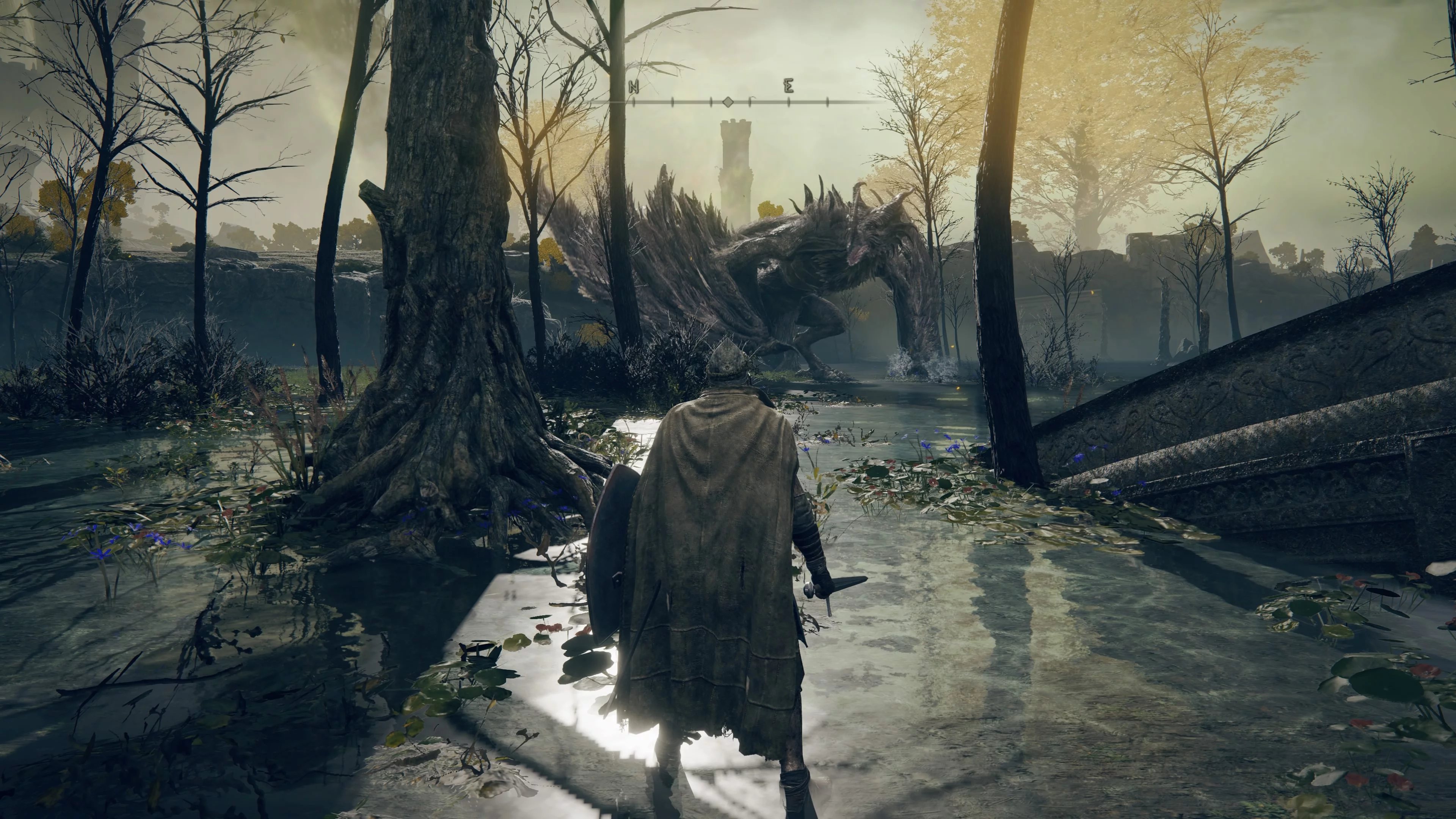
And even though FromSoftware's recent games resemble each other (with the exception of the Armored Core series), they still have serious differences that show up not just in new settings but in the gameplay itself. For example, Sekiro: Shadows Die Twice's design is built on pure soulslike foundations, but its combat, progression, and approach to exploration are completely different from the iconic Dark Souls. FromSoftware took the same approach with Elden Ring. On the surface, yes, it's a mix of all the studio's past games, swapping tight corridors and swamps for a fairly large open world. But dig a little deeper and it becomes clear this is one of the studio's strangest, most unusual projects — one that doesn't work as a perfectly tuned Dark Souls, nor as a well-built open-world game.
My attitude toward Elden Ring shifted gradually — from pure delight to disappointment. The first ten hours were a blast: exploring locations, gathering resources, fighting bosses, finding hidden dungeons. But before getting too far ahead in talking about the gameplay, let's follow tradition and spend a little time on the story and quests here. In Miyazaki's games, the plot — and especially how it's delivered — has always sparked plenty of debate. The designer doesn't even hide the fact that the main story gets added to his games at the latest stages of development, since the biggest focus is always on world-building, level design, and gameplay.
A Great Story Divorced from the Game
Elden Ring was supposed to be something of a revolution for the genre, since FromSoftware decided not only to give storytelling more room, but also brought on writer George R. R. Martin, best known for his fantasy series A Song of Ice and Fire. Martin wrote the mythology and backstory of the world, but his contribution to the game itself is barely noticeable: the plot, its delivery, and even the characters are pure, standard FromSoftware storytelling.
Events unfold in the fictional land of the Lands Between, ruled for centuries by Queen Marika. She received the Elden Ring — a set of runes governing the laws of creation — from the Greater Will, a mysterious higher power. With that power, the queen quickly crushed all the old kingdoms and established her own order, called the "Golden Order" in the game. After court intrigues that ended with the death of one of the queen's sons, Marika shattered the Elden Ring into several shards and was sealed away in the Erdtree herself. The kingdom was left in the hands of demigods, lackeys, and deranged relatives. Having gotten hold of a shard of the ring each, they went to war with one another for the throne, turning a once-thriving kingdom into a rotting swamp.
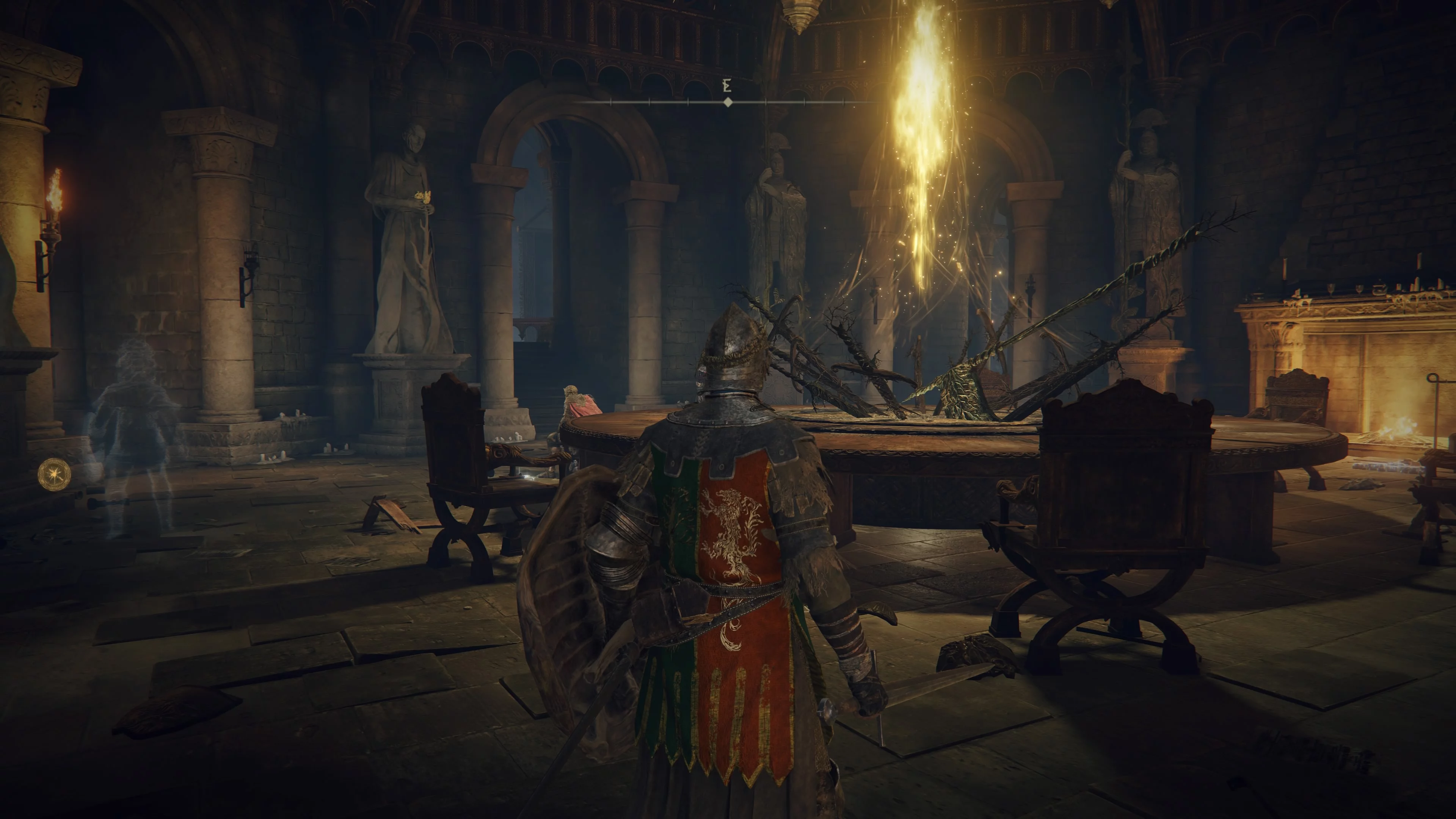
Elden Ring's protagonist is called a "Tarnished." Tarnished are ordinary warriors able to see a special golden light tied to the Elden Ring. Their main goal is to collect all the shards and become the ring's new ruler. No one had even come close to this goal before the protagonist showed up, so the player faces a tough road: crossing the whole kingdom, fighting countless enemies, and untangling all the intrigue that unfolded during Queen Marika's reign along the way.
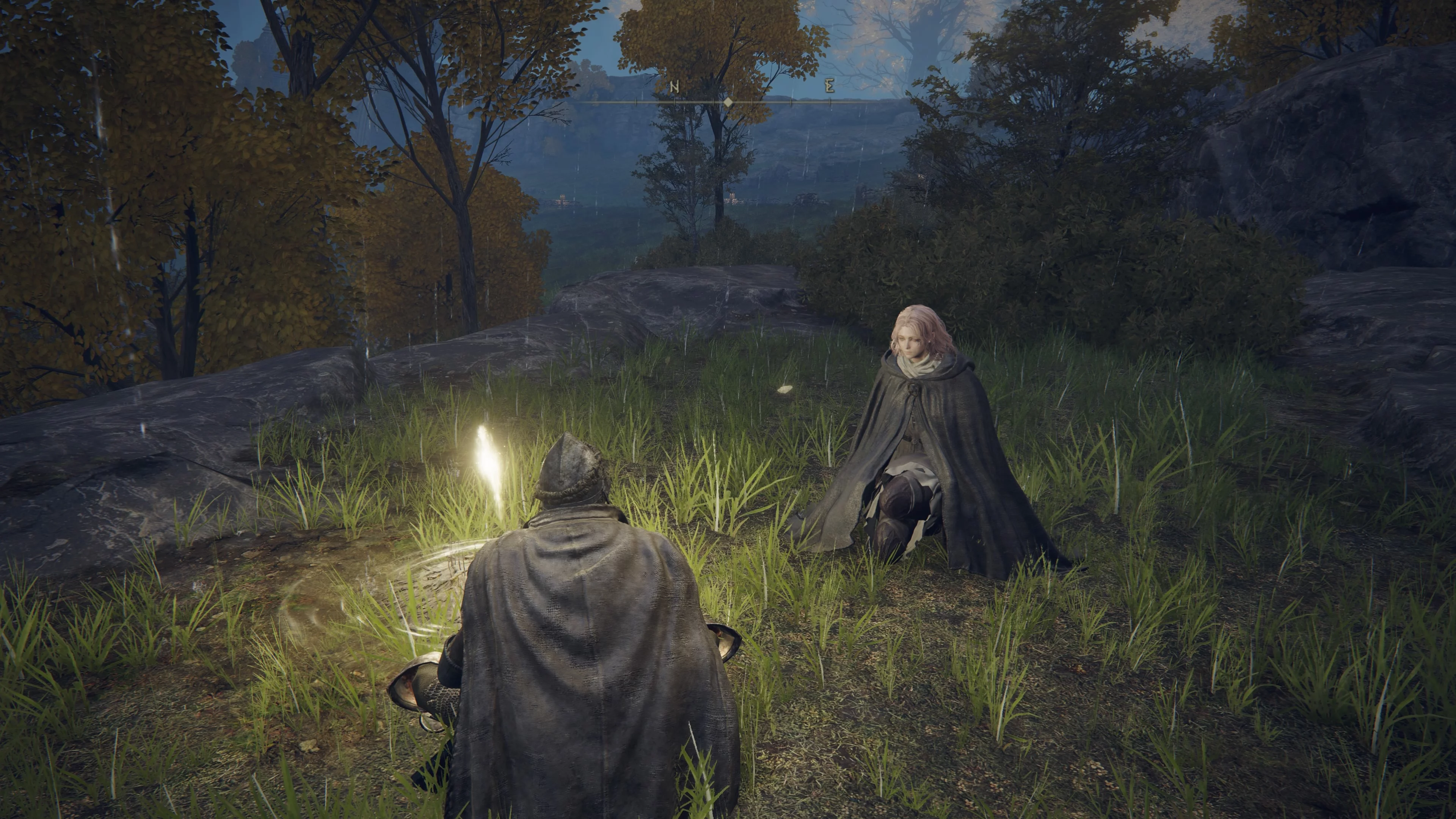
Elden Ring's story is usually split into two parts: lore and narrative. The first turned out superb. The world is thought through down to the smallest detail. Every enemy, boss, environmental element, even every consumable, is woven neatly into the world. Behind the scenes there are lavish faction intrigues, conspiracies, love affairs — all clearly made as an homage to Game of Thrones, which is exactly why Miyazaki brought Martin on as co-writer. But again, all of that stays behind the scenes. There's no explicit narrative here, same as in FromSoftware's other games. No quest log, no story markers, not even a codex you could use to learn what a given boss was even up to before showing up to fight you.
If you don't use guides and tips from the internet, you can easily miss most of the story content and never see even half the key characters. And at launch, no detailed walkthrough existed yet, so a lot of players just steamrolled through bosses toward the final fight. On my replay, though, I paid special attention to the quests and finished every one of them. And honestly, it's hard to imagine anyone beating the game 100% without hints or guides, because understanding FromSoftware's design logic is close to impossible.
Here are a few examples to show you just how absurd the quests here can get. In Elden Ring, key characters constantly teleport away with no explanation or hints. The game doesn't tell you that you even need to look for them, let alone where they are. A character might send you back to the starting area — somewhere you'd never return to on your own, since by all logic it's already been cleared. But if you accidentally leave the location where a quest started and head into the next high-level biome, the quest either breaks or gets cut short. Sometimes a quest requires finding a specific item without which the story can't move forward. No one will tell you where to look for it, let alone where to bring it, since the quest-giver has already teleported to another region. It gets better: one story branch, which affects one of the endings, requires using an emote in a specific spot to trigger it. Except no character ever tells you this needs to be done in the first place. You just have to find the right place and guess the emote, which the game otherwise only uses for PvP. And that's how most of Elden Ring's quests work.
FromSoftware just needed to add a quest log to make Elden Ring feel even a little more like an RPG. Instead, the developers went with yet another randomizer, where instead of enjoying the world and story, players have to keep one eye on video guides made by data-miners who had to take the game apart piece by piece just to get some idea of the right order to progress in. Sure, you can simply ignore the story side of things and focus on gameplay, but then you'd miss a huge chunk of content: endings, valuable items, and some pretty powerful gear.
In the end, Elden Ring's story is genuinely good — but only when taken apart from the game itself. Players would have an easier time watching a two-hour recap of the whole story than untangling the riddles FromSoftware came up with on their own.
An Empty but Compelling Open World
The open world in Elden Ring is both the game's biggest strength and arguably its main problem. Back in 2022, when the game launched, plenty of reviewers sang the open world's praises and called it nearly perfect. Supposedly, soulslike gameplay shines brightest in spacious locations: the player charts their own path, decides which bosses to fight first and which to leave for later, and so on. Supposedly, the open world brought a ton of value to the soulslike formula. Having put a hundred and fifty hours into Elden Ring, I can say with confidence: that's a huge exaggeration.
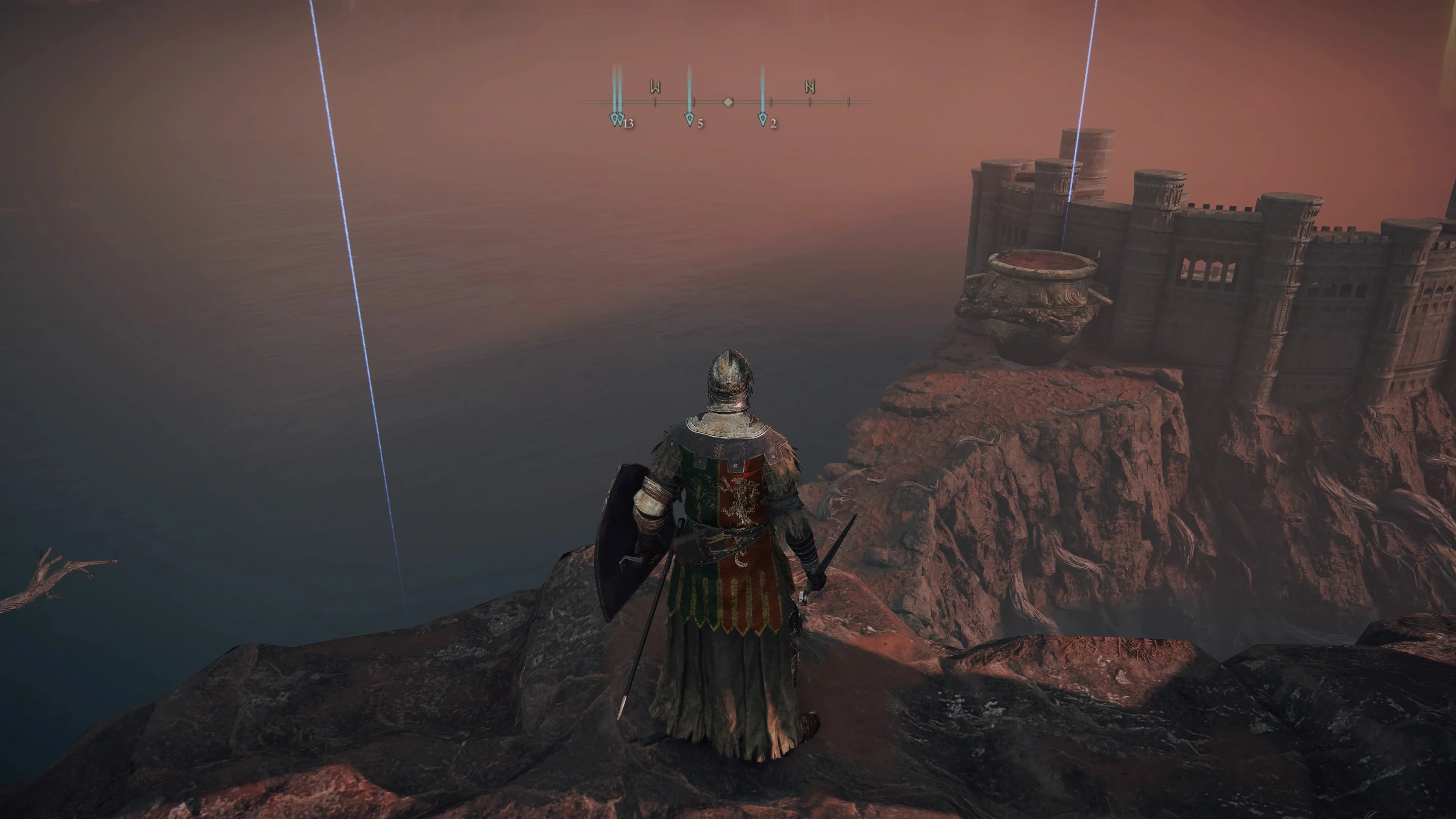
To understand why the open world doesn't work in soulslike games, and why in Elden Ring it's more of an annoying gimmick than a strength, you first need to understand the design foundations of Demon's Souls and its successors. Any soulslike's foundation is built on metroidvania principles. Picture a location made up of branching corridors, with a key boss or item waiting at the end. All the branches connect to each other through obstacles or tough enemies the player can overcome to unlock shortcuts. Since the hero automatically respawns at a key point after death (a "bonfire" in Dark Souls, a "Site of Grace" in Elden Ring), these shortcuts let you reach your main story goals faster while keeping as many resources as possible.
Locations are full of useful items and consumables that often serve as nice rewards for exploration. But their numbers are strictly limited: the player always needs to stay somewhat vulnerable, so boss fights never feel easy. Hidetaka Miyazaki has repeatedly said that overcoming hard obstacles and the dopamine hit of the reward is the key factor that keeps players moving forward. He's also added that if a player finds a special way through that lets them dodge excessive difficulty, that's still rewarding, because they managed to outsmart the designers.
Now take all the points above and apply them to Elden Ring's actual gameplay. Instead of a corridor system, we get a huge open world split into several biomes. Those biomes are strictly bounded by the terrain. In other words, you can't hop on a horse at the very start of the game and ride straight to the final boss, like you could in The Legend of Zelda: Breath of the Wild, which many journalists compared Elden Ring to. To open up passages between territories, you have to take down a number of key enemies. Within the locations themselves there are no restrictions, and you're free to tackle them however you like. So most players start exploring the open world, clearing out all the mini-bosses and uncovering dungeons and catacombs along the way.

Since there's essentially nothing else to do besides fighting, the player has no choice but to cut down everything living in the Lands Between, earning a huge amount of runes in return, which get spent on raising stats and buying consumables. That's how the resource-scarcity principle disappeared from the formula. And if a player spends a little time clearing the starting area and the first castle, they very quickly cross the threshold of the optimal difficulty level for that point. The game becomes noticeably easier and stops delivering the challenge it had in the first few hours. But I'll get back to the difficulty issue a bit later.
So it turns out the open world in Elden Ring is a dreary emptiness. Sure, it's definitely gorgeous — FromSoftware employs some of the best artists around. But most of it is just an empty page, and traveling across it is more tiring than in any Ubisoft game. When I was exploring the second major region — Liurnia of the Lakes — I genuinely sank into despair thinking about how much time it would take to clear such a massive area. But since I set myself the goal of a 100% playthrough and the platinum trophy, I had to check every corner. And aside from new weapons (mostly useless ones) and secret bosses, the game gave me nothing for exploring. And that's the best-case scenario. Most of the time, the developers rewarded exploration with crafting ingredients that have no real value.

The whole gameplay loop after clearing the starting area, Limgrave, turns into plain rune farming. And it would be one thing if enemies or secondary bosses were always unique, so fighting them felt like a reward for exploring. But no — bosses repeat, and repeat a lot. Sometimes they're duplicated or even dropped into the open world as regular enemies. Killing the same dragons over and over eventually becomes unbearably boring. You can count the truly unique enemies in the open world on your fingers; everything else is pure copy-paste.
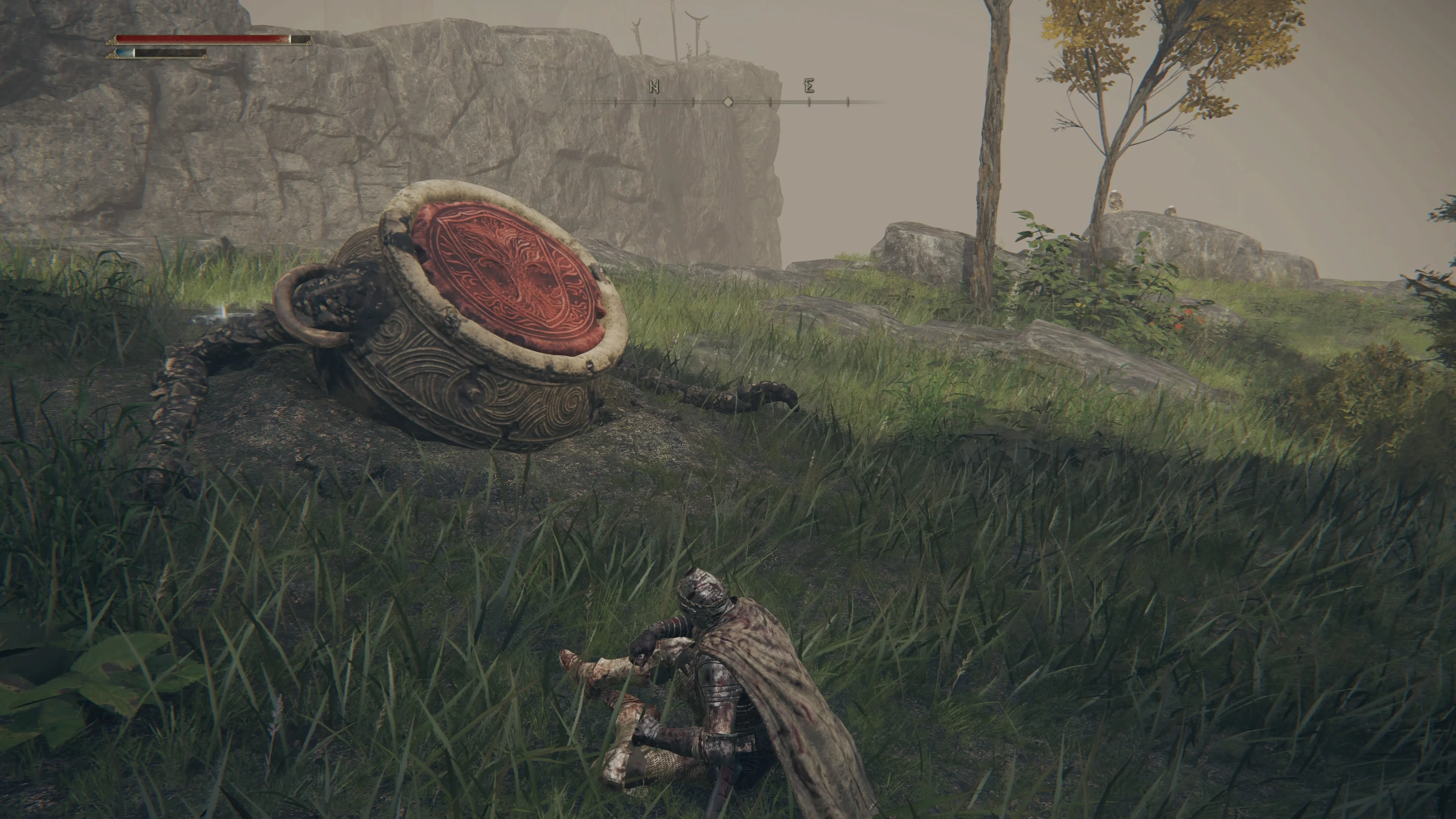
Elden Ring feels best in the closed-off locations that are classic for soulslikes. The Academy of Raya Lucaria, castles, the royal capital, the Haligtree — these are places worked out down to the smallest detail, with a solid balance and a decent set of challenges. They follow the metroidvania principle: there's no need to charge around on horseback, you can calmly and deliberately explore nooks, open new routes, and look for secrets. Sure, these maps still have problems with repeating bosses and modest rewards for full exploration, but it's hard to even care about those flaws, since the gameplay itself already delivers plenty of enjoyment.
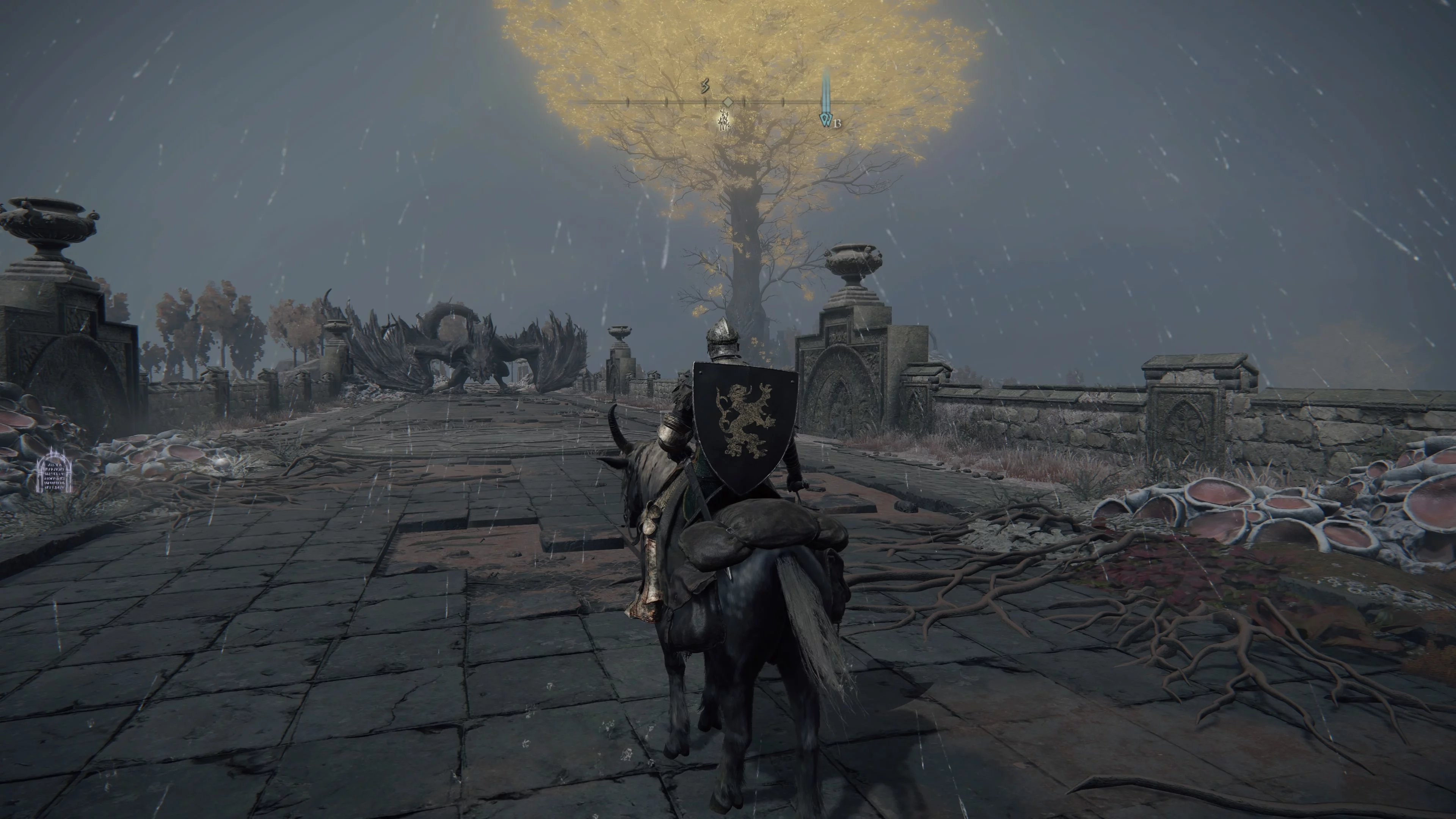
The locations in the Shadow of the Erdtree expansion are just as beautiful as the original, and their design is noticeably better. You just have to push through the starting zone with its huge empty field and ghostly gravestones, and then come the far more tangled, somewhat corridor-like maps with incredible verticality and challenges at every turn. I even started wondering whether FromSoftware's designers noticed the level-design mistakes in the original game and tried to fix them in the DLC. There's noticeably less pointless running around. On top of that, the reward for careful exploration now comes in the form of "Scadutree Fragments" and "Revered Spirit Ash," which boost your character's stats and without which boss fights become borderline unbeatable.
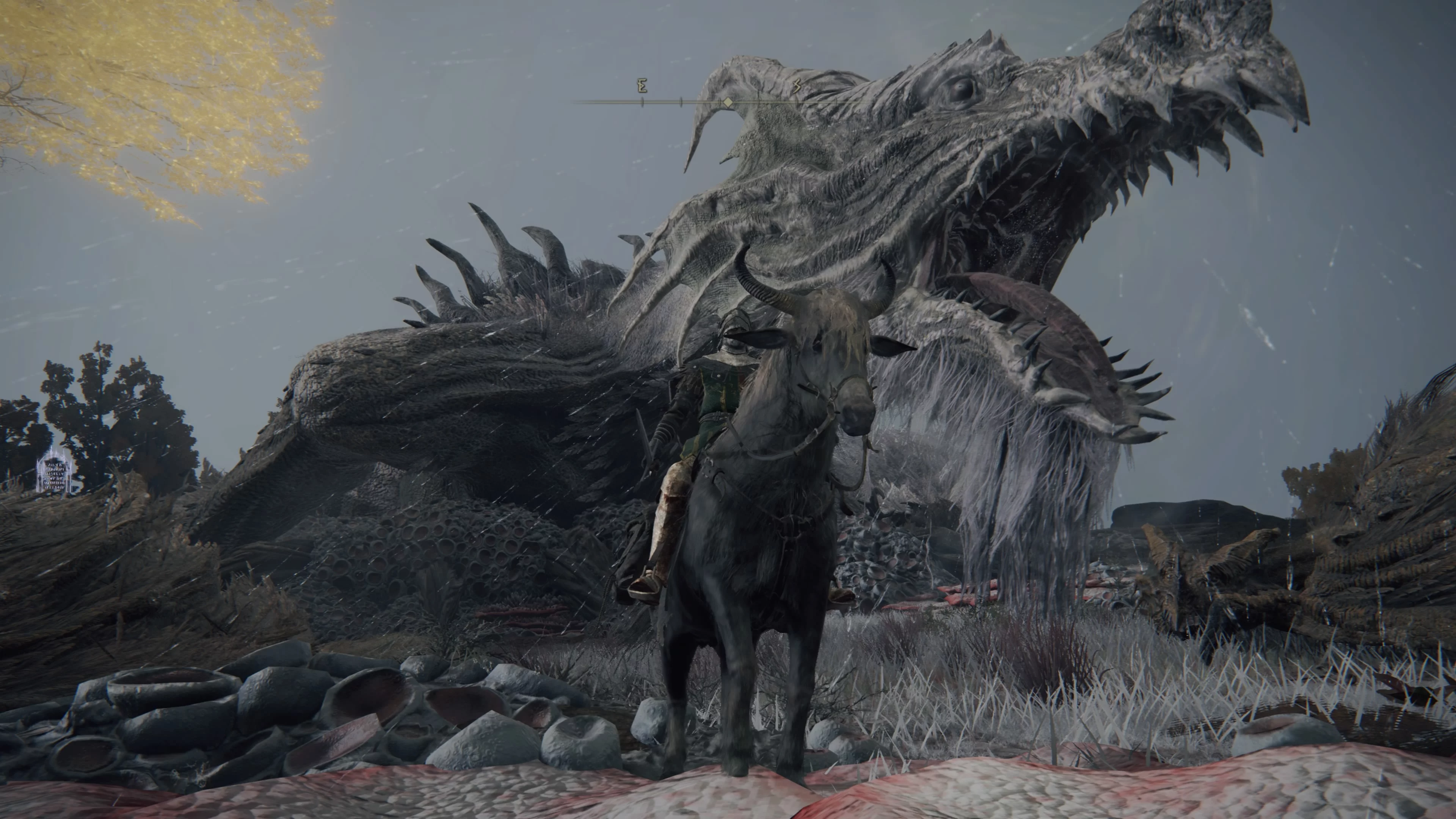
In the end, the open world in Elden Ring is a gimmick that gives almost nothing as a gameplay system. The DLC managed to tidy it up somewhat and even adapt it to the local design, but the core problem never went away: an open world is supposed to either entertain the player or serve as a sandbox for experiments, and Elden Ring delivers neither. The only real reasons that somewhat justify having an open world here are the sense of grand adventure, the gorgeous views, and the epic fights against huge dragons. Maybe that's exactly why there are so many of them in Elden Ring.
The Best Soulslike for Newcomers
Elden Ring is the most accessible and easiest soulslike FromSoftware has ever made — especially if you don't rush headlong toward the final boss and instead clear locations step by step, squeezing the most out of the available content. There are more than enough runes to level up every stat your build needs, and fairly simple weapon upgrading turns you into a killing machine even against the toughest enemies.
Build crafting in Elden Ring is very flexible. Even without crunching numbers or following specific guides, you'll easily put together something effective and viable. Not only is there a huge amount of weapons in the game, but most of them also come with a special skill that can become the core of your build. On top of that, dozens of Ashes of War — special skills you can attach to a standard sword or hammer — are hidden across the open world. Add to that a wide range of talismans with various effects, like boosting stats or increasing jumping-attack damage, plus plenty of armor that gives bonuses too. In short, anyone who likes experimenting will find plenty to do.

The second feature that helps make the game easier is the spirit ash system. Before a boss fight or an arena full of mobs, you can summon a friendly spirit to help you out in various ways. There's a huge number of them in the game, from a pack of wolves to massive armored knights. Of all the spirit ashes, the "Mimic Tear" stands out — it turns into a full copy of your character, with all your gear, but with a huge health pool. With it, the game becomes a very easy adventure.
The funny part is that the soulslike community tends to shame players who use the spirit ash system and busted bleed/frostbite builds. Supposedly, that's casual, and you're really supposed to beat Elden Ring in your underwear with a club. Honestly, that's a strange stance. The developers spent thousands of hours creating an incredible number of ashes and weapons specifically so players would use them, not suffer because of a handful of purists' principles.
As for me, over the whole playthrough I only used spirit ashes out of curiosity and to test their effectiveness. I managed to kill every key story boss without summoning any help. Even the famously unkillable Malenia, Blade of Miquella, called the toughest boss in the game, went down on my second attempt. And it's not because I'm some kind of pro — I just didn't speedrun the locations before the fight; I cleared every inch of the open world step by step instead. By the time of that fight, I was level 205, with fully upgraded gear and a stock of consumables that put the game's most dangerous boss on the ground.

Getting through the Shadow of the Erdtree expansion didn't cause much trouble either. Again, if you don't rush straight at the story bosses and instead explore the open world, gathering as many special resources as possible to boost your stats, the DLC doesn't feel all that super-hardcore. Only the expansion's final boss made me sweat a little.
In other words, if you play Elden Ring at a measured, unhurried pace, even a player far removed from soulslikes can beat it. At the same time, clearing every single inch the way I did on my playthrough is entirely optional, especially if you're not aiming for the platinum trophy. Most of the hidden items, ashes, and weapons will just sit in your inventory without ever being used for their intended purpose. Deliberately farming runes isn't necessary either: in some regions they're handed out in such quantities that you'll always have enough to level up.

And despite being the most accessible soulslike for a wide audience, Elden Ring is still, at the end of the day, a soulslike — and you're going to die a lot during your playthrough, no matter what. Sometimes you won't have enough health, sometimes enemies will catch you off guard, sometimes you'll end up fighting a fire-breathing dragon in a cramped space, sometimes you'll misjudge a jump distance, sometimes something else entirely will happen. On top of that, some bosses have blatantly unfair abilities: relentless area-of-effect attacks that are hard to dodge, endless combos that can't be blocked, or damage that kills in a single hit. And the nasty bosses in Shadow of the Erdtree are something else entirely. Some dash around the arena so fast you have to chase them down, others start attacking while their arena-entrance animation is still playing, and others wipe your fully upgraded health bar with a single hit. Add to that a camera that isn't exactly great, one that can sometimes spin around so wildly you lose sight of not just the boss, but your own character.
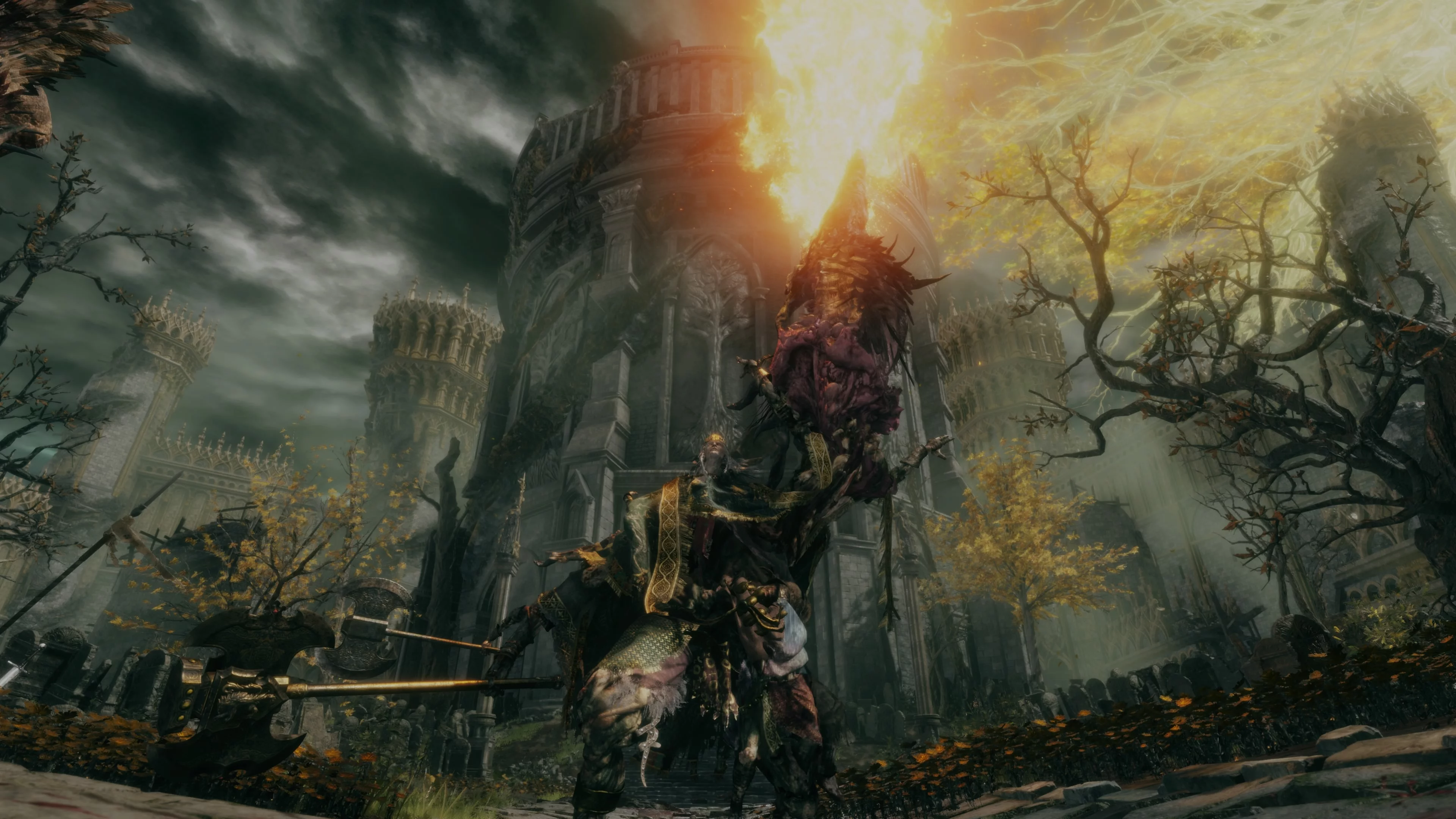
No matter how much people complain about the bad open world, the unpleasant storytelling method, and the unclear quests, Elden Ring is still fun to play — thanks to its engaging combat, flashy skills, and near-limitless build variety. No matter how many soulslikes other studios put out, none of them manage to be as fun to play as FromSoftware's own games. The flexible combat system offers plenty of ways to approach a fight. You can learn to parry enemy attacks and get through most fights without taking a single hit. Or use stealth to land critical hits from behind. Or hunt animals, craft arrows from their remains, and kill enemies from a safe distance. Or level up spirit ashes and just watch the AI do the fighting for you. Or build a full-on battlemage and cast spells so powerful that no swordsman will ever reach you. In short, Elden Ring leaves plenty of room for experimentation, and you can pull off pretty much any tactic you like.
***
Over the course of my many hours with Elden Ring, I felt a whole range of emotions — both negative and positive. It's far from the flawless game that reviewers made it out to be, and it's definitely not FromSoftware's best, especially next to the impeccable Bloodborne and the design-wise original Sekiro: Shadows Die Twice. Still, it's the studio's most varied soulslike in terms of combat and build crafting, even if it's less intricate and worse balanced than Dark Souls. The open world in Elden Ring is simply a feature that never pans out as a gameplay system, but it does subtly deliver a sense of grand adventure and shows off some indescribably beautiful landscapes. Those landscapes stuck with me so much that I even wanted to buy the art book.
Saying Elden Ring didn't deserve its "Game of the Year" title at The Game Awards also isn't something I can do. It earned it, fair and square. There's a soul to it that you rarely notice in other games. It shows in the painstaking work of the artists, animators, designers, and in Hidetaka Miyazaki's own vision. If for some unknown reason you've missed Elden Ring, now's the perfect time to catch up. Quest walkthroughs and detailed story breakdowns are already up on YouTube and on our own site. The patches that toned down Shadow of the Erdtree's difficulty are out. Performance and frame rates have been improved. So there's really no reason left to put off your adventure through the Lands Between.