ARC Raiders
Dans mes jeux


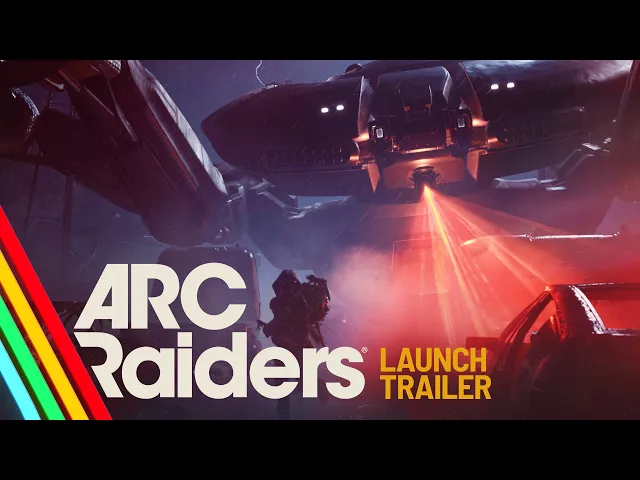
ARC Raiders is a third-person online extraction shooter that combines arcade gameplay with a post-apocalyptic “machine uprising” setting. Players leave an... En savoir plus
Toutes les langues (13)
Deutsch: interface, sous-titres
Español: interface, sous-titres
Français: interface, sous-titres
Italiano: interface, sous-titres
日本語: interface, sous-titres
한국어: interface, sous-titres
Polski: interface, sous-titres
Português (Brasil): interface, sous-titres
Русский: interface, sous-titres
Türkçe: interface, sous-titres
简体中文: interface, sous-titres
繁體中文: interface, sous-titres
ARC Raiders is a third-person online extraction shooter that combines arcade gameplay with a post-apocalyptic “machine uprising” setting. Players leave an underground refuge and head to the surface in search of valuable loot and other resources. Each run is time-limited—and it’s also a race for survival. Battles with aggressive robots and other players risk costing you all your hard-won loot if you die, so the main goal is to evacuate with your haul in time.
Background

ARC Raiders takes place on Earth in the distant future. In 2180, the “Collapse” occurred—a series of disasters (floods, fires, and earthquakes) that destroyed civilization. Some of the population of the Polito region (similar to Italy) evacuated into space aboard ships as part of Operation Exodus, while the survivors who remained took refuge deep underground. Generations later, the “Era of the Sun” began—a period of returning to the surface and trying to restore the planet with the help of new technologies.
Suddenly, Arcs began falling from the sky—combat robots whose origins remain a mystery. The First War lasted ten years and ended with the Raiders’ triumph over Baron, a titanic Arc that had terrorized the planet. But peace didn’t last long. The Second War began with an invasion by even more advanced and larger machines. Humanity was forced to retreat underground once more, founding Speranza—the last stronghold, with a network of tunnels for dangerous expeditions to the surface.
Story and Characters

ARC Raiders takes place in the midst of the Second War. You are an unnamed Raider from Speranza, a blank slate with no backstory. The tutorial introduces the basics of survival and PvPvE, after which the main gameplay loop begins: expeditions to the surface in search of resources and technology. You’re helped by a hand-raised bot named Plushkin (Scrappy)—a mechanical rooster that supplies its owner with basic provisions after every raid, regardless of the outcome.
The game offers a nonlinear story campaign. The story and lore are delivered through the environment, Codex entries, and conversations in the hub, but their main part unfolds through completing missions that unlock access to new videos, cutscenes, items, and locations. The five key characters not only immerse you in the atmosphere through dialogue, but also drive the economy by selling the player everything they need:
- Celeste (Leader) — seeds and crafting materials; a survivor of the First War and founder of Speranza, she has dedicated herself to preserving the city;
- Tian Wen (Gunsmith) — weapons and ammunition; the tough daughter of a First War heroine;
- Lance (Medic) — medicine, shields, and augments; an android suffering from amnesia;
- Apollo (Engineer) — explosives and gadgets; a traveling mechanic who hides his past and has settled in Speranza temporarily;
- Shani (Head of Security) — access to keys and special equipment; an expert on the Arcs and Celeste’s resource for planning operations.
More than 60 missions serve as the main tool for progression. The tasks are simple (“fetch and carry,” “find and kill,” activating points), but their variety keeps things interesting: from hunting specific robots for rare parts to using enemies’ cores as weapons.
Raid Geography

The world of ARC Raiders is not one continuous open space, but a collection of isolated arena maps scattered across different regions and loosely connected to Speranza, the game’s central hub. The locations aren’t designed to copy reality, but are instead a fantasy inspired by it: recognizable landscapes sit alongside the ruins of civilization and machines. Travel is also based on a gameplay conceit: Raiders use an extensive network of tunnels and reach the surface by elevator. These also serve as evacuation points.
The maps feature a variety of biomes, from snowy peaks and alpine forests to swamps and toxic industrial wastelands. Many areas on the maps feature a high degree of “verticality.” Loot distribution is tied to zones with unique loot-value parameters. The higher a zone’s level—for example, “pink” or “red”—the better the chance of finding valuable, rare loot. Lower-level zones, such as “gray” or “orange,” offer loot of average value. The link to a specific resource class (weapons, medicine, electronics) isn’t strict, and players can still find basic materials even in specialized locations.
Maps unlock gradually as players gain experience (measured by the number of raids). At launch, there were four: Dam Battlegrounds, Buried City, Spaceport, and Blue Gate. Since then, the developers have added several more. To make loot collection easier, zones are marked by resource type and loot value (gray, yellow, red). Of particular interest are rooms locked with a key (guaranteed loot), hidden “black locations” with random events, and “red zones” with rare exotic loot.
To keep raids from becoming routine, map modifiers radically change the conditions. For example, nighttime makes robots stronger and reduces the number of extraction points, but offers more loot behind locked doors. Nature comes alive, rewarding players with more natural resources. Or there are electromagnetic storms, which disable electronics, disrupt machinery, and deal lightning damage.
Movement is life

ARC Raiders emphasizes mobility and verticality. The character can run, jump, slide, roll, and use parkour moves freely. They can pull themselves up, grab ledges, and maneuver with ease—a feeling that other extraction games were missing. Over long distances, the protagonist slings their weapon over their back, noticeably increasing their speed.
Parkour opens up alternative routes: you can climb ledges, jump between rooftops, use ziplines, and descend to any point on the map. Height and smart use of the environment expand your tactical options and let you fire at enemies from advantageous, unexpected positions.
Interacting with the world involves actively using objects: you need to hack crates and doors, activate mechanisms, call in airdrops, and open or block passages. Sound plays a key role: making noise attracts the attention of ARCs and other players. Everything you find goes into your inventory and has weight—being overloaded directly reduces your total stamina, which the entire progression system revolves around. Even when running long distances, you have to manually put away your weapon to conserve energy.
The interface is minimalist and doesn’t distract from the action. A marker system lets you mark enemies, points of interest, and directions for your teammates. Items important for progression are highlighted, making it faster to loot what you need from defeated enemies or containers. Consumables are managed through quick-access slots: grenades, healing items, shield repairs—it’s all close at hand. Voice chat includes both proximity chat (you can hear nearby players—indicated by a yellow icon) and a team channel (white microphone).
Combat System

Battles in ARC Raiders are split between fights with ARCs and skirmishes with players. Weapon effectiveness varies depending on the target: whether you’re dealing damage to energy shields, armor, or an unprotected body. Experienced fighters often combine weapons: for example, they might take one large-caliber gun for heavy single-shot damage and another with a high rate of fire and low recoil to control recoil at close range.
ARCs are usually assigned to specific areas: some patrol buildings, while others control the streets, though they may aggressively pursue players in the heat of battle. Each robot has vulnerable points—turbines, engines, and stabilizers. There are 11 types of ARCs in the game, from reconnaissance drones and spider-like orbs to heavy machines on the level of the Queen.
In PvP, accuracy and smart positioning are what count: it’s important to take cover at the right time and use the height advantage where appropriate. The TTK (time to kill) is distinctive here: it generally gives you a chance to react to a surprise attack (unless you’re hit by a point-blank shotgun blast), but mistakes come at a high cost. Healing and restoring shields take a long time, so losing your armor in an open fight is often fatal without your teammates providing cover.
There are 8 weapon categories in total, each suited to a different purpose and using different ammo types, covering every combat range. Each weapon has a rarity (five tiers, from gray to legendary) and upgrade levels that improve its base stats, making even starter weapons more competitive. There’s plenty of ammo, but players often prefer heavy ammo—it’s more effective and takes up less space.
Shields are a separate part of your tactics. They differ in capacity and how they affect your loadout: for example, a medium shield won’t let you bring a large bag for loot, while a heavy shield offers the most protection in a firefight but limits your mobility. Remember that no shield blocks 100% of damage—some still gets through to your health (HP). When your HP is low, severe “interference” covers the interface, but a shield that’s been depleted can be replaced with a spare, and some gadgets automatically create a smoke screen when your shield is breached.
Gadgets offer significant tactical advantages: they distract and turn Arcs against each other, send them after enemy players, create cover, or activate unmarked evacuation points outside the standard routes.
Loot, Resources, and the Economy

All the loot you collect during a raid can be broken down into basic materials: metal, plastic, chemicals, electronics, and so on. You need these constantly—for weapon repairs, crafting ammo and consumables, upgrading workbenches, and more. Since inventory space is limited, it can make sense to break down some loot during an expedition.
Backpack size depends on your augment. For example, the Looting module expands your inventory and unlocks a hidden pocket (which saves items if you die), but limits you to light shields. Players constantly have to choose between carrying capacity and survivability. Inventory management is simplified: no “Tetris”—every item takes up exactly one slot.
Stash management is familiar to fans of the genre: Loot is extracted automatically, and if there isn’t enough space, it stays in your inventory. You can upgrade your storage capacity, but each level costs more. Thanks to dynamic spawning, it’s worth checking containers even in places other players have already passed through. Rare military and medical crates are especially valuable, as are trophies taken from the bodies of defeated Arcs and rivals.
The economy is built around two currencies. The main one is money (used to buy gear and expand your stash), while the secondary one is seeds. Trading is standardized: all NPCs offer the same prices. There’s no in-game auction, but you can trade items directly.
Progression and Crafting

Character progression in ARC Raiders is tied to activities during a raid: you earn experience for dealing any damage, collecting loot, and exploring the world, up to level 75. Skill points are distributed across three branches—Conditioning (health and stamina), Mobility (reduces stamina use), and Survival (maximum carry weight, chance of finding items, and crafting during a raid). This choice is permanent, as there’s no way to redistribute points.
The production system is built around an ecosystem of seven workbenches, from basic weapon and medical stations to purifiers and gadget benches. Upgrading one workbench often requires components made at another, creating a deep chain of processing. When working with your arsenal, remember the golden rule of saving money: only modify weapons after fully repairing them, or upgrades will cost much more. Quests help unlock more recipes, and progress counts for all group members at the same time.
Players who have reached the progression cap can choose to wipe their progress through the “Expedition” project. You can send your character on a 60-day mission, which effectively resets your current upgrades, skills, and workbenches, but preserves all cosmetics. In return, your next raider receives account-wide bonuses: expanded stash, bonus skill points, and faster experience gain.
The competitive side comes to life in seasonal ranked races lasting around 38 days. Progress on the leaderboard only counts if you successfully extract, while night raids and special events double the points you earn. The most successful players, who can survive and complete objectives, earn the title “Local Legend” and unique cosmetic rewards at the end of the season.

ARC Raiders est le tireur d'extraction idéal pour les débutants, exempt d'éléments hardcore excessifs. Mais il a tout ce qu'il faut pour tomber amoureux du genre : des tonnes de butin, une progression simple, de superbes graphismes, des situations uniques et une communication active.
Offres des magasins et réductions


Configuration système requise et test PC
- Windows 10 64-bit
- Processeur: Intel Core i5-6600K
- Mémoire vive: 12 GB
- Carte graphique: GeForce GTX 1050 Ti; Radeon RX 580
- DirectX: 12
- Broadband Internet connection
- Keyboard, mouse
- Windows 10 64-bit
- Processeur: Intel Core i5-9600K
- Mémoire vive: 16 GB
- Carte graphique: GeForce RTX 2070; Radeon RX 5700 XT
- DirectX: 12
- Broadband Internet connection
- Keyboard, mouse

Avis et notes
Sans doute le meilleur jeu de tir Extraction… avant qu'il ne soit envahi par les tricheurs. Et il est le meilleur pour deux raisons : 1) grâce à sa communauté, clairement divisée entre les modes PvP et PvE ; 2) grâce à ses développeurs compétents qui ont créé le jeu sur Unreal Engine 5, mais sans ces satanés lumens/nanites, etc. Chapeau à eux !
Пожалуй лучший представитель экстракшн шутеров... до того как начал тонуть в обилие читерастов. А лучший по двум причинам: 1) из-за комьюнити, что чётко разделилось на пвп и пве составляющую. 2) из-за грамотных разрабов, что сделали игру на пятой анриле, но без сраных люменов/нанитов и т.д. Честь им за это и хвала!

Le jeu est extrêmement bien réalisé et très dynamique comparé aux autres extractions. De plus, il offre une verticalité accrue et un système qui augmente le risque de provoquer des affrontements avec d'autres joueurs, les Arks étant attirées par le bruit. Mention spéciale au drone lance-roquettes.
Игра сделана крайне добротно, при этом достаточно динамичная по сравнению с другими экстракшенами, плюс обладает большей вертикальностью и системой повыщающий риск при желании устроить замес с другими игроками за счёт Арков слетающихся на шум, отдельный привет ракетному дрону

Un jeu plutôt bon, divisé en composantes PvP et PvE, avec de bonnes options de progression et de montée en niveau, un moteur graphique correct et une communauté pas entièrement toxique.
Довольно неплохая игра, которая разделилась на ПВП и пве составляющая, хорошая возможность копыта и прокачки неплохой движок ну и не совсем токсичное коммьюнити

J'ai joué à Arch Riders pendant 400 heures. C'était amusant au début, mais maintenant il y a tellement de tricheurs qu'il ne reste plus que les joueurs acharnés qui suivent la méta. L'armure est complètement inutile, la nouvelle carte est déséquilibrée. En gros, les développeurs ont créé le jeu, empoché un peu d'argent, et puis ils l'ont oublié.
Я наиграл уже 400 часов в арк райдерс. В начале было интересно, но теперь очень много читеров, остались только задроты которые бегают с метой. Броня абсолютно бесполезная, новая карта не сбаланшена. Короче разрабы сделали игру, заработали и забили на нее.

Le jeu est très bien, mais le systéme de matchmaking est devenu tout nul. pvp et pve tout mélangé, plein de campeur et l'antitcheat pas au top...