From Marketing to Technology: Who Is John Ternus, Apple's New CEO?
 Evgenia Zavyalova
Apple kicked off its annual product presentation on September 9, 2026, with a spectacular opening video showcasing the capabilities of the iPhone 18. After sweeping flyovers of the California coastline, the camera settles on a mysterious figure. Tim Cook appears on screen — the man gadget fans have grown used to seeing over the past 15 years — only to say: "No, not me. You need that guy over there."
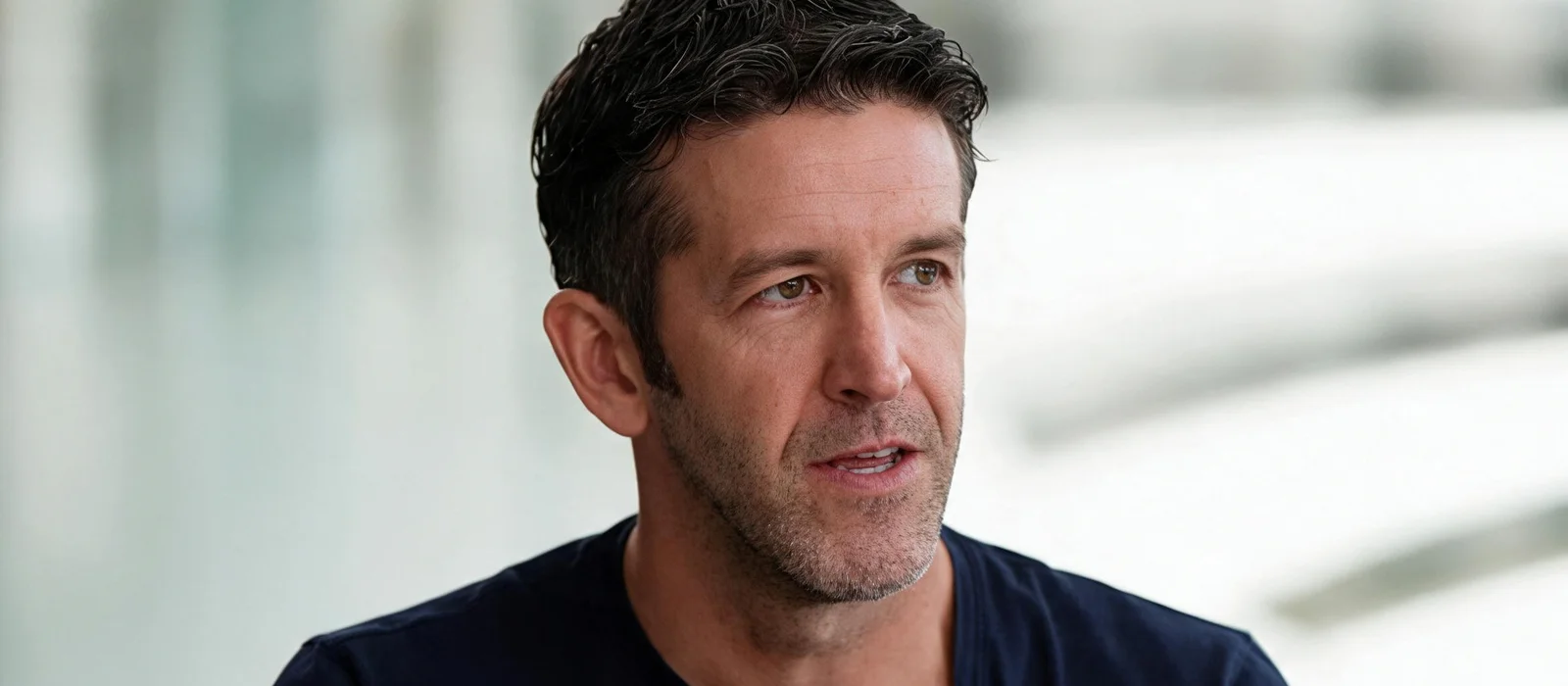
That's how Apple officially introduced the public to its new chief executive officer (CEO) — 51-year-old John Ternus. Ternus joined Apple back in the Steve Jobs era, then spent years "standing in the wings" while Tim Cook presented his creations to the world, before finally stepping into the spotlight himself. If Jobs was the strategist who set Apple's direction and Cook the manager and marketer, Ternus is the engineer. Analysts and the public are wondering whether this signals Apple's shift from marketing and selling more of its existing gadgets toward developing genuinely new technology.
So what do we actually know about Apple's new CEO?
Education and Joining Apple
Although word that Ternus would succeed Cook at Apple's helm broke back in April 2026, Ternus remains something of a dark horse. His official biography is thin on details — he doesn't even reveal the city where he was born, only that it was California.

At the University of Pennsylvania — one of the most prestigious in the US — Ternus earned a bachelor's degree in mechanical engineering and applied mechanics, along with a minor in psychology. During his studies he swam for the university team, and his senior project was a device that let paralyzed people control a robotic arm using head movements.
After graduating in 1997, Ternus took a job as an engineer at Virtual Research Systems, where he worked on virtual reality headsets — back when VR was still considered science fiction, not reality.

In 2001, Ternus joined Apple as a member of the design team. Among other things, he worked on the design of the Cinema Display monitor. By his own account, he once found himself on the factory floor and noticed under a loupe that a supplier had cut 35 grooves into the screws holding the monitor's casing together instead of 25. The supplier had to redo the whole batch.
I distinctly remember stepping back for a minute and thinking to myself, "What the hell am I doing? Is this normal?" I realized it might not be normal, but it's right. It's right because I'd already spent months working on that product, and if you're going to spend that much time on something, you should put in your very best effort. Maybe a customer notices, maybe they don't, but either way, it mattered to me to know that my teammates and I had considered everything about it and done the very best job we could.
The Man Behind Your iPhone: Ternus's Achievements at Apple
Ternus climbed the corporate ladder quickly at Apple. Within three years he'd made manager, but he turned down a private office, choosing to stay with his team — earning him a reputation as "a man of the people."

In 2005, Ternus took charge of hardware development for the iMac and iPad, and by 2013 he'd been named vice president of hardware engineering. From then on, Ternus was responsible for all of the company's "hardware" — the iPhone, iPad, and Mac — which brought in 80% of Apple's total profit. The only thing outside his purview was software: the App Store, iCloud, Apple Music.
Ternus is credited with pushing Apple away from Intel processors and onto its own chips, which restored the Mac's lead in performance and efficiency. He's also the one who convinced leadership to build a separate operating system for the iPad — iPadOS — since he felt the shared iOS wasn't unlocking the tablet's full potential. Ternus also oversaw the launch of the MacBook Neo and steered the development of the Apple Watch.

Starting with the iPhone 12, Ternus has been responsible for the hardware of the entire iPhone lineup — from the return to flat-edged casing to the rollout of 5G and OLED displays. The iPhone Air, the thinnest iPhone ever made, was also built by Ternus's team, who developed unique manufacturing techniques to fit all the "hardware" into an ultra-thin body. And finally, it was Ternus who oversaw development of the foldable iPhone Duo — the freshest, and clearly not the last, of Apple's new releases.
"A Nice, Conservative Guy": What Colleagues and the Public Think of Ternus
Around Apple's halls, John Ternus is described as "one of the nicest, most level-headed people in leadership." His reputation as a good guy rests on his willingness to listen and his reluctance to look for someone to blame when things go wrong. Insiders say Apple staff see him as a more decisive leader than Cook. "In situations where Cook would keep asking questions instead of picking between two options, Ternus will make the call," Bloomberg writes.

To ordinary users, Ternus comes across as endearing — "the guy next door" who simply loves technology and is happy to talk about it for hours at a presentation. His charm, calm voice, and lack of pretension have long won over Apple fans.
At the same time, Ternus is described as a conservative person who's careful with money and wary of new products. For example, he was skeptical about the idea of a self-driving car, about the Apple Vision Pro, and about the HomePod smart speaker. That conservatism has made him unpopular with some of Apple's leading engineers, who say he avoids bold technical bets and doesn't stake his reputation on the future.

Interestingly, almost nothing is known about John Ternus's personal life. He leads an incredibly private existence — even more so than his predecessor. All that's known is that Ternus loves rally racing, is married, and has children. That's it.
Expectations for the "New Broom"
Unlike Cook, Ternus is an engineer, not a manager, and the main hope pinned on his appointment is a return to the focus on technology that defined the Steve Jobs era. Cook, for his part, did well: over his 15 years at the helm, Apple's annual revenue grew to nearly $500 billion, and the company crossed the $5 trillion market cap mark for the first time in its history.

But Apple's pace of technological progress has slowed considerably. In recent years the company has mostly just polished its existing products — giving the iPhone a slightly bigger battery, say, or a slightly faster chip. Meanwhile, the Apple Car had to be scrapped, and development of the VR headset has been slowed or frozen.
Ternus is expected to get to work on something truly new, to deliver a breakthrough — even though such a breakthrough is barely achievable given today's realities. The physical limits of microelectronics no longer allow performance gains simply by shrinking transistors the way they once did. On top of that, there's rising component costs and a memory crisis. Still, many believe that an engineer as accomplished as Ternus is said to be should be able to find a way through these problems. Or at least try.

For now, the symbol marking the start of the "Ternus era" is the foldable iPhone Duo. Its unveiling inspired some (it's Apple's first bold move in the iPhone lineup in a decade) and left others unmoved. Skeptics point out that the foldable market is fairly niche and already dominated by giants like Samsung and Huawei. Apple, they say, is simply repeating what others have already done — at a higher price.
Ternus also has to close the gap between Apple and Google or OpenAI in the AI race. In 2025, Apple promised a major AI-powered overhaul of Siri but failed to deliver. At its 2026 presentation, Ternus officially announced an update to the company's built-in AI, Apple Intelligence, which will run entirely on-device, without relying on the cloud. A revamped Siri — capable of drawing on messages, photos, and the calendar, plus AI image recognition — is due out in late October 2026.

Whether these expectations will pan out, or whether Apple has other priorities in mind, remains unclear — the company is staying away from bold promises. So only time will tell whether the "new broom" sweeps in a new direction.
Quelles nouvelles choses attendez-vous d'Apple dans les années à venir ?
***
Apple in the Jobs era was a company of ideas; under Cook, a company of efficiency. Under Ternus, Apple could become a company of technology and engineering excellence. The new CEO knows literally every screw in Apple's gadgets, has an analytical engineering mind, a perfectionist streak, a reputation as a genuinely nice guy, and an easy way of talking to people.
That said, Ternus is only 51, and if he turns out to be a good leader, we'll be talking about his legacy again in another 15 years. Or sooner, if it comes to that.